Parking is often treated as a supporting facility in commercial real estate, but for many businesses, it can have a direct impact on customer convenience, employee experience, daily operations, and overall commercial performance.
A commercial complex may have a good location, attractive shops, modern offices, restaurants, and professional facilities. However, if visitors regularly struggle to find a parking space or face difficult entry and exit conditions, the property’s overall appeal can decline.
This is particularly important in cities where customers and employees frequently depend on cars and two-wheelers for daily travel.
For businesses operating in a commercial complex, parking can influence whether customers choose to visit, how long they stay, and whether they return. For property owners and investors, parking can affect tenant demand, occupancy, property reputation, and long-term competitiveness.
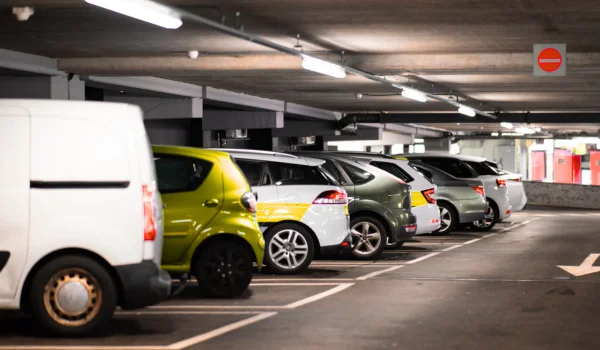
Therefore, parking should not be viewed simply as a place to leave a vehicle. It is an important part of the overall commercial-property experience.
Why Parking Matters in a Commercial Complex
Parking provides the connection between a customer’s journey and the commercial property itself.
A typical customer experience may look like this:
- The customer travels to the commercial area.
- They approach the commercial complex.
- They look for an entrance.
- They find a parking space.
- They walk from the parking area to the business.
- They complete their visit.
- They return to their vehicle.
- They leave the property.
Problems at the parking stage can affect the entire experience.
A well-managed parking facility can provide:
- Greater customer convenience
- Easier access
- Better visitor experience
- Reduced congestion
- Improved tenant satisfaction
- More efficient traffic movement
- Better employee convenience
- Stronger commercial appeal
The importance of parking varies according to the property’s location, business mix, customer profile, and availability of public transportation.
- Parking Influences Customer Convenience
Convenience is one of the most important factors in commercial activity.
Customers may be willing to travel farther for a particular brand or service, but unnecessary parking difficulties can discourage visits.
For example, a customer visiting a commercial complex may have to:
- Drive around looking for a space
- Park far away
- Wait for another vehicle to leave
- Navigate narrow parking areas
- Pay unexpected parking charges
- Walk through an inconvenient route
Repeated problems can make customers choose another location.
For businesses that depend on frequent visits, convenient parking can therefore become an important competitive advantage.
- Parking Can Affect Footfall
Parking does not create footfall by itself, but inadequate parking can limit the number of people willing to visit a property.
This is particularly relevant for:
- Retail stores
- Restaurants
- Clinics
- Banks
- Showrooms
- Family-oriented businesses
- Supermarkets
- Service centres
A customer may decide not to visit a commercial complex if they expect parking to be difficult.
Therefore, businesses should consider not only how many people live or work around the property, but also how those people are expected to travel to it.
- Different Businesses Have Different Parking Requirements
There is no universal parking requirement for every commercial complex.
A small professional office may have relatively limited visitor parking needs.
A restaurant may experience heavy parking demand during lunch and dinner.
A clinic may require convenient patient drop-off areas.
A retail showroom may need parking for customers as well as delivery vehicles.
A large office complex may require substantial employee parking.
Therefore, parking planning should be based on the expected use of the property, rather than simply providing a fixed number of spaces.
- Customer Parking and Employee Parking Should Be Considered Separately
Commercial complexes often serve two major groups of vehicle users:
- Customers and visitors
- Employees and business owners
Their parking patterns can be very different.
Employees may park for several hours, while customers may stay for 30 minutes, one hour, or a few hours.
If employees occupy the most convenient customer parking spaces throughout the day, visitors may find it difficult to park.
Where appropriate, commercial complexes can improve efficiency by creating:
- Visitor parking
- Employee parking
- Reserved parking
- Short-stay parking
- Two-wheeler parking
- Loading and service areas
Good parking management should consider the different needs of each group.
- Two-Wheeler Parking Is Particularly Important in Indian Cities
Commercial parking should not focus only on cars.
Two-wheelers are a major part of everyday urban transportation in India, making dedicated motorcycle and scooter parking important for many commercial properties.
A well-planned parking facility may need to accommodate:
- Motorcycles
- Scooters
- Cars
- Accessible parking spaces
- Delivery vehicles
- Service vehicles
- Bicycles, where appropriate
Two-wheeler parking should be clearly organised so that motorcycles do not obstruct pedestrian movement or vehicle circulation.
- Easy Entry and Exit Improve Parking Experience
Parking capacity alone does not guarantee convenience.
A commercial complex may have many parking spaces but still create problems if vehicles cannot enter or leave efficiently.
Important factors include:
- Entrance width
- Exit width
- Turning radius
- Internal traffic flow
- Ramp design
- Security checks
- Ticketing or access systems
- Signage
- Peak-hour traffic
A poorly designed entrance can create queues extending onto surrounding roads.
This can affect not only customers but also nearby traffic and neighbouring businesses.
- Parking Layout and Internal Circulation Matter
The design of parking spaces can influence how efficiently the facility operates.
A good parking layout should make it relatively easy for drivers to:
- Enter
- Find a space
- Park
- Leave the space
- Reach the building
- Exit the property
Clear lane markings, directional signs, pedestrian routes, and logical circulation can reduce confusion.
Poorly planned parking can result in:
- Traffic bottlenecks
- Vehicle conflicts
- Blocked spaces
- Difficult turning
- Unnecessary waiting
- Safety concerns
Therefore, parking design is as important as parking capacity.
- Visibility and Signage Make Parking Easier
Visitors should be able to identify the parking entrance quickly.
Clear signs can indicate:
- Car parking
- Two-wheeler parking
- Visitor parking
- Reserved parking
- Accessible parking
- Exit
- Lift lobby
- Staircase
- Loading area
- Payment counter
In large commercial complexes, digital parking guidance systems can also help visitors locate available spaces.
The objective is simple:
A visitor should not have to search extensively to understand where and how to park.
- Parking Should Be Conveniently Connected to the Building
The parking facility should not feel disconnected from the businesses it serves.
Customers should have a reasonably convenient route from their vehicle to:
- Shops
- Offices
- Restaurants
- Clinics
- Common areas
- Elevators
- Entrances
For larger complexes, elevators and staircases connecting parking areas to commercial floors can significantly improve convenience.
Pedestrian routes should also be clear and safe.
- Parking Can Influence the Customer Experience
Customer experience includes everything from arriving at the property to leaving it.
Consider two commercial complexes:
Complex A
- Easy entrance
- Clearly marked parking
- Plenty of two-wheeler spaces
- Good lighting
- Simple pedestrian access
- Easy exit
Complex B
- Difficult entrance
- Congested parking
- Poor signage
- Narrow lanes
- Confusing exits
- Long waiting times
Even if both complexes have similar shops and facilities, customers may develop very different opinions about them.
This demonstrates that parking can become part of the overall brand experience of a commercial complex.
- Parking Is Important for Restaurants
Restaurants often experience concentrated parking demand.
Customers may arrive in groups, families, or multiple vehicles.
Demand can increase during:
- Lunch hours
- Dinner hours
- Weekends
- Holidays
- Festivals
- Special events
Restaurants also need delivery and service access.
A commercial complex with restaurants should therefore consider both customer parking and operational vehicle movement.
If parking becomes consistently difficult during peak dining hours, customers may choose restaurants with easier access.
- Parking Is Important for Clinics and Healthcare Businesses
Healthcare facilities have unique parking requirements.
Patients may include:
- Senior citizens
- People with limited mobility
- Families with children
- People requiring assistance
Convenient drop-off and pick-up areas can therefore be particularly important.
Healthcare-oriented commercial complexes may benefit from:
- Accessible parking
- Patient drop-off zones
- Ambulance access
- Clear entrances
- Ramps
- Elevators
- Short walking distances
Parking planning should support the specific needs of healthcare visitors rather than treating the facility like an ordinary retail property.
- Parking Matters for Office Complexes
Office employees may remain at the property for several hours.
This creates a different parking pattern from retail.
An office complex may need to manage:
- Employee parking
- Visitor parking
- Client parking
- Two-wheelers
- Company vehicles
- Service vehicles
Parking demand may be especially high during working hours.
For businesses, employee parking can also influence workplace satisfaction.
If employees spend significant time searching for parking every morning, the problem can become a recurring source of inconvenience.
- Parking Can Influence Tenant Demand
Businesses looking for commercial premises often evaluate parking alongside rent, location, visibility, and other facilities.
A property with convenient parking may be more attractive to businesses whose customers regularly arrive by vehicle.
This can include:
- Showrooms
- Restaurants
- Clinics
- Banks
- Professional services
- Retail stores
- Service centres
However, businesses should evaluate the actual parking experience, not simply whether a property brochure says “parking available.”
- Shared Parking Can Improve Efficiency
Commercial complexes can sometimes use shared parking more efficiently than individual standalone businesses.
Different businesses may experience peak demand at different times.
For example:
- Offices may have high demand during weekdays.
- Restaurants may have higher demand during evenings.
- Retail may experience greater weekend traffic.
- Clinics may have different appointment patterns.
A well-managed shared parking system can potentially improve utilisation across these different demand periods.
However, this requires effective management and sufficient capacity.
- Parking Management Is as Important as Parking Capacity
A large parking facility can still perform poorly if it is badly managed.
Parking management can involve:
- Entry and exit control
- Space allocation
- Security
- Signage
- Parking enforcement
- Payment systems
- Visitor management
- Cleaning
- Maintenance
- Peak-hour traffic control
Technology can also help.
Larger developments may use:
- Automated parking systems
- Digital payment
- Parking guidance
- Number-plate recognition
- Real-time space indicators
- Mobile-based parking systems
The appropriate system depends on the size and complexity of the commercial property.
- Parking Charges Can Affect Customer Perception
Parking charges are another consideration.
Customers may be comfortable paying for parking in certain commercial locations, particularly where land and parking availability are limited.
However, unclear or unexpected charges can create dissatisfaction.
Commercial complexes should communicate:
- Parking rates
- Free parking periods, if any
- Payment methods
- Rules
- Penalties
- Reserved areas
Transparency can make the parking experience more predictable.
Businesses should also understand whether parking costs are likely to affect their customers.
- Parking Security Matters
Customers want to feel confident that their vehicles are reasonably secure while visiting a property.
Depending on the development, useful security measures can include:
- CCTV
- Security personnel
- Controlled entry and exit
- Adequate lighting
- Clearly marked parking areas
- Emergency assistance
- Visitor management
The exact requirements vary by property.
Security is particularly important for commercial complexes that remain active late into the evening.
- Lighting and Safety Should Not Be Ignored
Parking areas should be designed with user safety in mind.
Important considerations include:
- Adequate lighting
- Clear pedestrian routes
- Visibility around corners
- Proper signage
- Safe staircases
- Elevator access
- Emergency systems
Poorly lit or confusing parking areas can make visitors uncomfortable and negatively affect the perception of the property.
- Parking and Accessibility Are Closely Connected
Parking is an important part of overall accessibility.
A commercial complex may have excellent road connectivity and public transportation but still be inconvenient for customers who depend on private vehicles.
Similarly, people with mobility limitations may need accessible parking located conveniently near entrances or lifts.
Therefore, parking should be integrated with the broader accessibility strategy of the commercial complex.
- Loading and Delivery Areas Should Be Separated Where Possible
Commercial properties also need space for operational vehicles.
These can include:
- Delivery trucks
- Courier vehicles
- Supplier vehicles
- Maintenance vehicles
- Waste collection vehicles
If these vehicles share the same routes used by customers, congestion can increase.
Where practical, separate service access can improve traffic flow and reduce conflicts between customers and operational vehicles.
This is especially important for retail and food businesses.
- Parking Can Affect Property Reputation
A commercial complex develops a reputation based on the overall experience it provides.
Parking problems can become part of that reputation.
Customers may describe a property as:
- Convenient
- Easy to access
- Well managed
or:
- Difficult to park at
- Congested
- Confusing
- Inconvenient
Online reviews and word-of-mouth can amplify these perceptions.
Therefore, parking management can indirectly influence how customers perceive the entire commercial complex.
- Parking Becomes More Important During Peak Periods
Average parking availability does not tell the whole story.
A complex may have enough spaces on an ordinary weekday but experience severe shortages during:
- Weekends
- Festivals
- Sales events
- Office peak hours
- Evening dining periods
- Special events
Developers and property managers should therefore evaluate peak parking demand, not just average daily demand.
Businesses should also observe the property during the specific hours when their customers are most likely to visit.
- Parking Requirements Can Change Over Time
Commercial complexes should consider future demand.
A property may initially have sufficient parking but become crowded as:
- More businesses move in
- Footfall increases
- Nearby development grows
- Office occupancy rises
- New restaurants open
- Customer traffic changes
This is why parking planning should account for potential future demand wherever feasible.
- Parking Can Influence Commercial Property Investment
For investors, parking should be part of the property’s overall assessment.
Important questions include:
- How much parking is available?
- Is it legally and practically usable?
- Is parking shared or dedicated?
- Are there separate customer and employee areas?
- Is parking charged?
- How is it managed?
- Is parking sufficient during peak periods?
- Can parking demand increase in the future?
A property with attractive commercial space but inadequate parking may face challenges depending on its target tenant profile.
Commercial Complex Parking: What Businesses Should Check
Before leasing or purchasing commercial space, businesses should physically inspect the parking facility.
Check Capacity
Determine whether there are enough spaces for expected customer and employee demand.
Check Peak-Hour Availability
Visit during the business’s busiest periods.
Check Entry and Exit
Test how easily a vehicle can enter and leave.
Check Two-Wheeler Parking
Do not assume car parking availability means sufficient parking overall.
Check Distance to the Building
A parking space that is technically available but inconveniently located may not provide much practical value.
Check Parking Rules
Understand:
- Charges
- Reserved spaces
- Visitor policies
- Employee parking
- Time limits
- Access restrictions
Check Security
Look at:
- CCTV
- Lighting
- Security staff
- Controlled entry
- Emergency arrangements
Parking Checklist for a Commercial Complex
| Parking Factor | What to Evaluate |
| Capacity | Is parking sufficient for expected demand? |
| Car parking | Number and convenience of spaces |
| Two-wheelers | Dedicated and organised parking |
| Entry | Easy and safe vehicle access |
| Exit | Smooth traffic movement |
| Circulation | Adequate internal movement |
| Signage | Clear directions |
| Pedestrian access | Safe route to the building |
| Accessibility | Suitable spaces and routes for people with disabilities |
| Security | CCTV, lighting and personnel |
| Charges | Clear and reasonable parking policy |
| Visitor parking | Dedicated or easily available spaces |
| Employee parking | Proper allocation where required |
| Delivery access | Separate or managed service movement |
| Peak demand | Availability during busy periods |
| Maintenance | Clean and functional parking area |
Common Parking Mistakes in Commercial Complexes
- Focusing Only on the Number of Spaces
More spaces do not automatically mean better parking.
Design, circulation, access, and management also matter.
- Ignoring Two-Wheelers
In many Indian markets, two-wheeler parking is essential.
- Mixing Customer and Service Traffic
Delivery vehicles and customers sharing the same restricted space can create congestion.
- Ignoring Peak Hours
Average parking demand can hide serious peak-time shortages.
- Poor Signage
Visitors should not have to guess where to park.
- Neglecting Pedestrian Routes
Customers need a safe and convenient path from their vehicle to the building.
- Poor Lighting
Parking areas should remain comfortable and usable during evening hours.
- Unclear Parking Charges
Unexpected fees can negatively affect customer perception.
- Ignoring Future Demand
A property should ideally consider how parking requirements may change as business activity grows.
How Developers Can Improve Parking in Commercial Complexes
Developers can improve parking performance by integrating parking into the property’s overall design.
Plan for Different Users
Consider separate or appropriately managed requirements for:
- Customers
- Employees
- Visitors
- Deliveries
- Service providers
- Accessible parking users
Create Clear Circulation
Design vehicle routes that minimise unnecessary conflicts.
Integrate Pedestrian Movement
Connect parking areas with entrances, lifts, and common spaces.
Use Clear Signage
Make entrances, exits, floors, zones, and pedestrian routes easy to understand.
Consider Technology
Larger properties may benefit from digital parking management and real-time availability systems.
Plan for Peak Demand
Consider the property’s busiest periods rather than relying only on average demand.
Maintain the Facility
Parking areas should be regularly inspected, cleaned, repaired, and properly managed.
Does Every Commercial Complex Need Extensive Parking?
No.
Parking requirements depend on:
- Location
- Public transportation
- Property type
- Customer profile
- Business mix
- Urban density
- Local regulations
- Availability of nearby parking
A commercial complex in a highly transit-connected urban area may have different parking needs from a suburban retail development.
The objective should be appropriate parking, not simply maximum parking.
Parking vs Public Transportation
Businesses should not consider parking in isolation.
A commercial complex can be accessible through a combination of:
- Private vehicles
- Two-wheelers
- Metro
- Buses
- Walking
- Taxis
- Ride-hailing services
Strong public transportation can reduce dependence on private vehicles.
At the same time, some businesses will continue to need substantial parking because of their customers, employees, or operational requirements.
Therefore, the best approach is to understand the actual transportation behaviour of the property’s users.
How Businesses Can Evaluate Parking Before Choosing a Property
A practical approach is to visit the commercial complex several times.
Visit During Business Hours
Check normal parking demand.
Visit During Peak Hours
See whether spaces remain available when the property is busiest.
Test the Entrance
Drive into the property and observe how easy it is to navigate.
Test the Exit
Check whether vehicles face queues when leaving.
Walk From Parking to the Business
Consider the experience from a customer’s perspective.
Ask Existing Tenants
Existing businesses can provide useful insight into:
- Parking availability
- Peak-time problems
- Customer complaints
- Management quality
- Parking charges
This can provide information that may not appear in a property advertisement.
Frequently Asked Questions
Why is parking important for a commercial complex?
Parking affects customer convenience, employee experience, accessibility, traffic flow, and business operations. In vehicle-dependent locations, inadequate parking can reduce the attractiveness of a commercial property.
Does more parking always make a commercial complex better?
No. Parking quality, layout, access, circulation, management, security, and convenience are also important.
Why is two-wheeler parking important?
Two-wheelers are widely used for urban travel in India. Commercial complexes therefore need appropriately planned motorcycle and scooter parking alongside car parking.
Should commercial complexes have separate customer and employee parking?
Where practical, separating or clearly managing these parking needs can improve customer access and reduce competition for convenient spaces.
Does parking affect commercial property value?
Parking can influence the attractiveness of a commercial property to businesses and customers, which can affect tenant demand and overall commercial performance. However, property value depends on many factors.
Is free parking necessary for a successful commercial complex?
Not always. Whether free or paid parking works depends on the location, competition, customer expectations, and parking availability. Clear and transparent policies are important.
How can parking problems affect businesses?
Parking problems can discourage customers, create delays, affect employee convenience, increase congestion, and negatively influence the perception of the commercial property.
How should parking be evaluated before leasing a commercial space?
Businesses should check capacity, peak-hour availability, parking charges, entry and exit, two-wheeler facilities, security, pedestrian access, delivery movement, and the distance between parking and the business premises.
Is parking important if a commercial complex has metro connectivity?
Yes, although the required parking capacity may differ. A property with strong public transportation may have lower dependence on private vehicles, but businesses should still evaluate the transportation habits of their actual customers and employees.
Final Thoughts
Parking is much more than an additional facility attached to a commercial complex.
It is an important part of the customer journey, employee experience, accessibility, business operations, and property management system.
A customer may decide whether to visit a business partly based on how convenient the overall trip is. An employee may consider commuting and parking when evaluating a workplace. A retailer may depend on easy customer access, while a restaurant may experience significant parking demand during evenings and weekends.
For property owners and developers, effective parking can help create a more functional and attractive commercial environment. For businesses, evaluating parking before leasing or purchasing space can help prevent operational and customer-service problems later.
The most successful commercial complexes do not necessarily have the largest parking facilities. Instead, they provide parking that is appropriately planned, easy to access, properly managed, secure, well connected to the building, and suited to the needs of their users.
Ultimately, the goal is simple:
Make it easy for customers and employees to arrive, park, reach the business, and leave without unnecessary inconvenience.
When parking works well, it becomes almost invisible to the customer. When it works poorly, it can become one of the first things people remember about the property.