Location is one of the most important factors determining whether a commercial complex succeeds or struggles.
A well-designed commercial complex can offer modern offices, attractive retail spaces, parking, security, restaurants, and other facilities. However, if customers cannot reach it easily, businesses do not find enough demand, or the surrounding area does not support commercial activity, even a high-quality property can face challenges.
On the other hand, a strategically located commercial complex can attract businesses, customers, investors, and tenants even when its facilities are relatively simple.
This is why the old real-estate principle of “location, location, location” remains particularly relevant to commercial property.
The success of a commercial complex is influenced not only by the building itself but also by its relationship with the surrounding roads, residential areas, offices, transportation networks, competing properties, customer base, and future development.
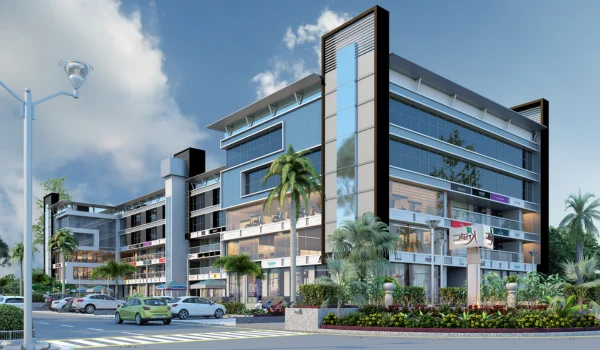
Why Location Matters for a Commercial Complex
A commercial complex exists to support business activity.
Businesses need customers, employees, suppliers, service providers, and convenient transportation. The location of the complex affects how easily all these groups can interact with the property.
A good location can provide:
- Better customer accessibility
- Higher visibility
- Greater potential footfall
- Easier employee commuting
- Better connectivity
- Stronger tenant demand
- Improved business exposure
- Greater convenience
- Better long-term commercial potential
However, “good location” does not simply mean being in the centre of a city.
A location should be considered in relation to the type of businesses operating in the complex and the customers those businesses serve.
A professional office complex may benefit from proximity to other offices and transport links, while a retail complex may require strong pedestrian and vehicle traffic.
- Accessibility Is One of the Biggest Location Factors
A commercial complex needs to be easy to reach.
Customers may avoid a business if reaching the premises is inconvenient, even when the business itself provides excellent products or services.
Accessibility can include:
- Major roads
- Local roads
- Public transportation
- Metro connectivity
- Bus routes
- Railway stations
- Pedestrian access
- Auto-rickshaw and taxi availability
- Entry and exit points
- Parking access
For example, a commercial complex located near a major road with convenient public transportation can potentially serve customers from a wider area than one located deep inside a poorly connected neighbourhood.
Accessibility is particularly important for businesses that depend on regular physical visits.
- Road Connectivity Can Influence Business Activity
Road connectivity affects how easily customers, employees, suppliers, and delivery vehicles reach a commercial complex.
A property connected to important roads may benefit from:
- Greater visibility
- Easier navigation
- Larger customer catchment
- Faster access
- Better delivery movement
- Improved employee commuting
But being located on a major road is not automatically enough.
Businesses should also consider whether vehicles can actually enter and exit the property conveniently.
A commercial complex directly beside a busy road may have excellent visibility but poor access if:
- There is no convenient turning point
- Traffic congestion is severe
- Entry is difficult
- Parking access is poorly designed
- Pedestrian movement is unsafe
Therefore, visibility and accessibility should be evaluated together.
- Public Transportation Can Expand the Customer Catchment
Public transportation can significantly influence the attractiveness of a commercial location.
A complex near:
- Metro stations
- Bus stops
- Railway stations
- Major transit corridors
- Shared mobility points
may be easier for customers and employees to reach.
This is particularly important in large Indian cities where many employees and customers rely on public transportation.
Better transit connectivity can also increase the effective catchment area of a commercial property.
A business does not necessarily need to depend only on people living immediately around the complex. If the property is easily accessible from other parts of the city, it may attract customers and employees from a much larger area.
- Nearby Residential Areas Can Generate Consistent Demand
Residential development can be highly valuable for certain commercial complexes.
People living nearby regularly require:
- Grocery stores
- Pharmacies
- Clinics
- Restaurants
- Salons
- Banks
- Fitness centres
- Professional services
- Education services
- Convenience stores
- Household services
A commercial complex located close to a large residential catchment may therefore benefit from recurring local demand.
This is particularly useful for businesses that depend on repeat customers rather than occasional visitors.
For example, a neighbourhood commercial complex may not receive the same tourist or destination footfall as a major shopping centre, but it can develop a stable customer base through nearby residents.
- Nearby Offices Can Create a Different Type of Demand
Office districts can also support commercial complexes.
Employees working nearby may require:
- Cafés
- Restaurants
- Banks
- ATMs
- Pharmacies
- Convenience stores
- Fitness centres
- Travel services
- Professional services
- Food delivery and takeaway outlets
A commercial complex located near a large office population can therefore benefit from daytime business activity.
This is different from a residential catchment.
Residential areas can create demand throughout the day and evening, while office districts may generate particularly strong demand during working hours and weekdays.
Understanding this difference is important when determining which businesses should operate within the complex.
- Footfall Depends on Location and Business Type
Footfall is often discussed as one of the most important measures of commercial-property performance.
But not all footfall has the same value.
A commercial complex may receive thousands of visitors who have little interest in the businesses operating there.
Meanwhile, another complex may have fewer visitors but attract exactly the type of customers its tenants need.
For example:
- A clinic needs patients.
- A restaurant needs diners.
- A bank needs customers.
- A professional office needs clients.
- A fashion retailer needs shoppers.
- A warehouse needs logistics access.
Therefore, businesses should focus on relevant footfall, not simply total footfall.
- Visibility Can Strengthen a Commercial Complex
Visibility helps people notice a commercial property.
A complex located along a prominent road may have advantages such as:
- Easier brand recognition
- Better signage opportunities
- Higher awareness
- More spontaneous visits
- Easier navigation
However, visibility is affected by more than road frontage.
Businesses should also consider:
- Building height
- Signage visibility
- Road direction
- Nearby buildings
- Trees and physical obstructions
- Setbacks
- Entrance positioning
- Lighting
A property may technically be located on a busy road but remain difficult to notice because its entrance or signage is poorly positioned.
- Parking Can Make or Break Convenience
Location and parking are closely connected.
Customers may avoid an otherwise attractive commercial complex if parking is consistently difficult.
This is particularly relevant for:
- Restaurants
- Clinics
- Showrooms
- Banks
- Professional offices
- Family-oriented businesses
- Retail stores
A commercial complex should ideally provide parking that is appropriate for its expected customer and employee volume.
Businesses should assess:
- Number of parking spaces
- Two-wheeler parking
- Car parking
- Entry and exit
- Visitor parking
- Parking charges
- Peak-hour availability
- Accessibility from the main road
A location with excellent connectivity but inadequate parking may still create operational problems.
- The Surrounding Business Ecosystem Matters
A commercial complex does not operate in isolation.
The businesses located around it can influence its success.
Nearby establishments may include:
- Banks
- Offices
- Hotels
- Restaurants
- Retail stores
- Residential developments
- Educational institutions
- Hospitals
- Government offices
- Entertainment destinations
Complementary businesses can create additional customer movement.
For example, a commercial complex containing professional offices may benefit from being surrounded by banks, cafés, hotels, restaurants, and other business services.
This creates a broader commercial ecosystem.
- Tenant Mix and Location Work Together
The location of a commercial complex should match its tenant mix.
A complex in a residential neighbourhood may perform well with:
- Clinics
- Pharmacies
- Grocery businesses
- Restaurants
- Salons
- Convenience stores
- Local professional services
A complex in a corporate district may be more suitable for:
- Consulting firms
- Financial services
- Technology companies
- Corporate offices
- Business support services
- Restaurants and cafés
A retail-oriented property in a high-footfall location may attract:
- Fashion stores
- Electronics retailers
- Lifestyle businesses
- Food and beverage brands
Therefore, the same location can be excellent for one type of commercial complex and unsuitable for another.
- Competition Can Be Both a Benefit and a Risk
Competition near a commercial complex is not necessarily bad.
In some cases, businesses benefit from being located near similar establishments because the area becomes known for a particular type of product or service.
For example, customers may deliberately visit an area known for:
- Electronics
- Furniture
- Jewellery
- Automobiles
- Restaurants
- Professional services
This can create a destination effect.
However, excessive competition can also reduce individual business performance.
A commercial complex should therefore evaluate:
- Number of competing businesses
- Quality of competitors
- Price levels
- Customer demand
- Market size
- Differentiation opportunities
The goal is not necessarily to eliminate competition but to understand whether demand is large enough to support the businesses operating there.
- Location Influences Rental Demand
Location is also closely connected to tenant demand.
Businesses generally prefer commercial properties that can help them:
- Reach customers
- Attract employees
- Build visibility
- Maintain convenient operations
- Establish a professional presence
When demand for commercial space is strong, landlords may experience:
- Lower vacancy
- Better tenant retention
- Greater rental demand
- More competition among prospective tenants
However, rental demand can vary significantly even between nearby areas.
A complex on a well-connected commercial corridor may perform very differently from a similar property located just a few kilometres away.
- Location Can Affect Property Value
The location of a commercial complex can influence both current demand and long-term property value.
Investors commonly examine factors such as:
- Existing infrastructure
- Accessibility
- Population growth
- Commercial development
- Residential development
- Employment centres
- Public transportation
- Upcoming infrastructure
- Competition
- Supply of commercial space
A property in an area with improving infrastructure and growing business activity may have stronger long-term potential than a property in an area where commercial demand is stagnant.
However, future development should always be assessed carefully rather than assumed to happen simply because it has been announced.
- Future Infrastructure Can Change a Location
A commercial location should not be evaluated only on current conditions.
Future infrastructure can alter the attractiveness of an area.
Examples include:
- New roads
- Metro extensions
- Flyovers
- Transit stations
- Airports
- Business districts
- Residential projects
- Industrial developments
- Educational institutions
- Healthcare facilities
Improved connectivity can expand a property’s catchment area.
At the same time, construction can temporarily create problems such as traffic disruption, restricted access, noise, and reduced visibility.
Therefore, businesses and investors should consider both short-term disruption and long-term potential.
- Location Affects Employee Convenience
Businesses sometimes focus entirely on customers and overlook employees.
For office-based businesses, employee accessibility can be just as important.
Employees may consider:
- Travel time
- Public transportation
- Parking
- Safety
- Nearby food options
- Availability of daily services
- Connectivity to residential areas
A difficult commute can affect employee satisfaction and recruitment.
A strategically located commercial complex can make it easier for businesses to attract and retain employees, particularly when it is well connected to major residential and transportation corridors.
- Safety and Surrounding Environment Matter
The surrounding environment can influence how comfortable customers and employees feel about visiting a commercial complex.
Businesses should evaluate:
- Street lighting
- Pedestrian movement
- Traffic conditions
- Security
- Nearby activities
- Road conditions
- Cleanliness
- Emergency accessibility
A property may have excellent commercial potential but face challenges if the surrounding environment creates safety or convenience concerns.
- Delivery and Logistics Access Is Important
Modern businesses increasingly depend on deliveries and logistics.
Restaurants, retailers, pharmacies, offices, e-commerce businesses, and service providers may regularly receive:
- Inventory
- Food supplies
- Documents
- Equipment
- Packages
- Courier deliveries
A commercial complex should therefore provide practical access for service and delivery vehicles.
A location with excellent customer access but extremely difficult delivery access can create operational inefficiencies.
- Location Influences Different Businesses Differently
There is no universal definition of a perfect commercial location.
Consider these examples:
Retail Store
May prioritise:
- Visibility
- Footfall
- Parking
- Nearby residential areas
- Complementary retailers
Restaurant
May prioritise:
- Customer catchment
- Evening activity
- Parking
- Visibility
- Delivery access
Clinic
May prioritise:
- Accessibility
- Parking
- Residential catchment
- Public transportation
- Quiet surroundings
Corporate Office
May prioritise:
- Metro connectivity
- Employee accessibility
- Professional environment
- Parking
- Nearby business services
Bank
May prioritise:
- Visibility
- Accessibility
- Local population
- Office population
- Security
- Parking
This demonstrates why businesses should select a commercial complex based on their specific operating requirements.
- Location Can Affect Customer Behaviour
Convenience often influences whether customers choose one business over another.
Customers may prefer businesses that are:
- Easier to reach
- Easier to find
- Easier to park near
- Close to their home or workplace
- Located near other places they already visit
This creates a powerful advantage for well-positioned commercial complexes.
For example, someone visiting a bank may also visit a pharmacy, café, or retail store in the same complex if these businesses are convenient.
This is one reason commercial developments can benefit from a carefully planned tenant mix.
- Location and Commercial Complex Design Should Work Together
A good location cannot completely compensate for poor property design.
The building should support the advantages of its location.
For example, a high-visibility property should have:
- Clear signage
- Convenient entrance
- Accessible parking
- Good pedestrian movement
- Easy navigation
A complex near public transportation should have safe and convenient pedestrian connections.
A property serving office workers should provide appropriate:
- Elevators
- Parking
- Food options
- Security
- Common areas
In other words, location creates the opportunity, while property design helps convert that opportunity into business activity.
How to Evaluate the Location of a Commercial Complex
Before buying, leasing, or investing in a commercial complex, businesses and investors should conduct a structured location assessment.
Step 1: Study the Catchment Area
Identify:
- Residential population
- Office population
- Major institutions
- Customer demographics
- Existing commercial activity
Step 2: Check Accessibility
Evaluate:
- Main roads
- Public transportation
- Metro
- Bus routes
- Pedestrian access
- Vehicle entry and exit
Step 3: Observe Actual Traffic
Do not rely only on property brochures.
Visit the area at different times:
- Morning
- Afternoon
- Evening
- Weekdays
- Weekends
This can reveal differences in traffic and customer activity.
Step 4: Study Competitors
Identify nearby:
- Commercial complexes
- Shopping centres
- High streets
- Office buildings
- Retail destinations
Understand what businesses are already successful in the area.
Step 5: Check Parking
Determine whether parking is sufficient during peak hours.
Step 6: Examine Future Development
Look for planned or ongoing:
- Infrastructure
- Residential projects
- Office developments
- Transport improvements
- Commercial projects
Step 7: Assess Business Compatibility
Ask:
Will the location attract the type of customers our business actually needs?
This is often more important than simply measuring overall footfall.
Signs of a Strong Commercial Complex Location
A commercially attractive location often has several of these characteristics:
- Good road connectivity
- Reliable public transportation
- Strong residential catchment
- Nearby offices or institutions
- Adequate parking
- Visible entrance
- Consistent customer activity
- Complementary businesses nearby
- Appropriate tenant mix
- Reasonable competition
- Strong local demand
- Good safety and accessibility
- Potential for future development
No location needs to have every one of these characteristics. The importance of each factor depends on the property’s purpose.
Common Location Mistakes Businesses Should Avoid
Choosing Based Only on Low Rent
Low rent may appear attractive, but it can become expensive if the property generates insufficient business.
Assuming High Footfall Means High Sales
Footfall matters only when it includes relevant potential customers.
Ignoring Accessibility
A property can be visible but difficult to reach.
Overlooking Parking
Parking problems can discourage customers and employees.
Focusing Only on Current Conditions
Future infrastructure and surrounding development can influence long-term performance.
Ignoring Competition
Competition should be studied rather than automatically considered good or bad.
Choosing a Location Without Visiting It
Online maps and property brochures cannot fully show real-world traffic, accessibility, noise, parking, and customer movement.
Location Checklist for a Commercial Complex
Before making a property decision, businesses can use this simple checklist:
| Location Factor | Questions to Ask |
| Road connectivity | Can customers reach the property easily? |
| Public transport | Are buses, metro or other transport options nearby? |
| Visibility | Can people easily notice the property? |
| Parking | Is enough parking available during peak hours? |
| Residential catchment | Are enough potential customers living nearby? |
| Office catchment | Are workplaces generating daytime demand? |
| Footfall | Is the traffic relevant to the business? |
| Competition | How many competing businesses are nearby? |
| Tenant mix | Do neighbouring businesses complement each other? |
| Safety | Is the area comfortable for customers and employees? |
| Delivery access | Can suppliers and delivery vehicles access the property? |
| Future growth | Is the surrounding area developing? |
| Infrastructure | Are roads and public facilities adequate? |
| Business suitability | Does the location match the business model? |
Is a Prime Location Always Better?
Not necessarily.
A prime commercial location often comes with higher property prices and rents.
Businesses must determine whether the additional cost is justified by additional revenue, visibility, customer convenience, employee accessibility, or long-term value.
For example, a premium location may be essential for a luxury retail brand but unnecessary for a consultancy that primarily serves existing corporate clients.
The objective should therefore be to find the right location, not simply the most expensive location.
Location as a Long-Term Business Advantage
A strong commercial location can become a competitive advantage that is difficult for competitors to replicate.
Businesses can change:
- Interiors
- Staff
- Technology
- Marketing
- Product range
- Service offerings
But changing location can be expensive and disruptive.
A well-chosen commercial complex can therefore support a business for many years.
For investors, the same principle applies. Properties in strategically positioned commercial areas may benefit from stronger tenant demand and broader market interest, although returns always depend on the property’s price, costs, demand, and broader market conditions.
Frequently Asked Questions
Why is location important for a commercial complex?
Location affects accessibility, visibility, customer catchment, footfall, employee convenience, tenant demand, and long-term commercial potential.
What makes a good location for a commercial complex?
Good road connectivity, public transportation, suitable customer catchment, parking, visibility, nearby businesses, safety, and future development can all contribute to a strong location.
Does high footfall guarantee commercial success?
No. The quality and relevance of the footfall are often more important than the total number of visitors.
Is a commercial complex near a residential area a good investment?
It can be, particularly when the businesses operating there serve local residents. However, demand, competition, accessibility, pricing, and property quality should also be evaluated.
How does metro connectivity affect a commercial complex?
Good metro connectivity can make a property easier to access for customers and employees and can potentially expand its effective catchment area.
Is a main-road location always better?
Not necessarily. A main-road property may offer visibility but could have problems with traffic, parking, noise, or difficult entry and exit. Accessibility should be considered alongside visibility.
How does location affect commercial property value?
Location can influence tenant demand, rental potential, vacancy, customer accessibility, and investor interest. However, property value depends on multiple factors rather than location alone.
Should businesses consider future infrastructure projects?
Yes. Planned roads, metro extensions, transit hubs, residential projects, office districts, and other developments can influence future accessibility and demand. Businesses should verify the status and realistic timeline of proposed projects before relying on them.
Final Thoughts
The location of a commercial complex is much more than an address.
It determines how easily customers can reach businesses, how employees commute, how visible the property is, how much relevant footfall it can generate, and how attractive it may be to future tenants and investors.
A successful location generally combines accessibility, visibility, customer demand, suitable surrounding development, parking, transportation, and a business-friendly ecosystem.
However, the ideal location depends on what the commercial complex is designed to achieve.
A neighbourhood complex may succeed because it serves nearby residents. An office-oriented development may benefit from proximity to corporate districts and public transportation. A retail-focused complex may need stronger visibility and consumer footfall.
Therefore, businesses and investors should not ask simply:
“Is this a good location?”
They should ask:
“Is this the right location for the businesses, customers, employees, and long-term goals this commercial complex is intended to serve?”
That distinction can make the difference between a property that merely looks commercially attractive and one that actually performs well over the long term.