Choosing the right commercial property is an important decision for any business. The location and type of premises can influence customer accessibility, visibility, operating costs, employee convenience, branding, and even future growth.
Two common options available to businesses are commercial complexes and standalone commercial buildings.
A commercial complex brings multiple businesses together within a planned development, often with shared parking, security, maintenance, common areas, and other facilities. A standalone building, by comparison, is an independent commercial property that is generally occupied by a single business or a limited number of businesses.
Neither option is automatically better. The right choice depends on the business model, target customers, budget, space requirements, desired level of control, and location.
This guide explains the key differences between a commercial complex vs standalone building and helps businesses determine which option may suit them better.
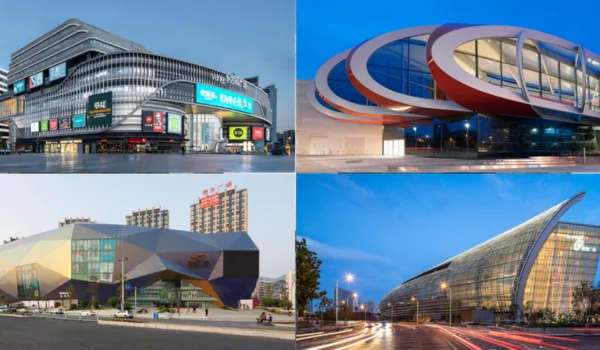
What Is a Commercial Complex?
A commercial complex is a planned commercial development containing multiple business units or establishments.
Depending on the property, it can include:
- Retail shops
- Offices
- Restaurants and cafés
- Clinics
- Banks
- Insurance offices
- Professional services
- Showrooms
- Salons
- Service businesses
- Small and medium-sized enterprises
Businesses generally occupy individual units while sharing certain facilities and infrastructure.
Common shared facilities can include:
- Parking
- Security
- Elevators
- Common corridors
- Entrance areas
- Fire-safety systems
- Cleaning and maintenance
- Signage
- Utilities and building services
The scale can range from a relatively small local commercial complex to a large multi-building development.
What Is a Standalone Commercial Building?
A standalone commercial building is an independent property that operates separately from a larger multi-tenant commercial complex.
A business may own or lease the entire building or a substantial portion of it.
Examples include:
- Independent office buildings
- Standalone restaurants
- Corporate offices
- Retail showrooms
- Clinics
- Banks
- Automobile dealerships
- Educational centres
- Warehouses with office components
- Brand-specific commercial outlets
The major advantage is greater control over the premises, branding, layout, signage, operating environment, and sometimes parking.
However, that additional control can also mean taking responsibility for more property-related costs and operations.
Commercial Complex vs Standalone Building: Key Differences
The fundamental difference is shared infrastructure versus greater individual control.
A commercial complex allows businesses to operate within an organised environment alongside other businesses. A standalone building generally provides more independence but requires the business or property owner to manage a larger portion of the premises independently.
| Factor | Commercial Complex | Standalone Building |
| Property environment | Shared commercial environment | Independent property |
| Other businesses | Usually many tenants | Usually one or fewer businesses |
| Parking | Often shared | Dedicated or independently managed |
| Security | Common security may be available | Usually arranged independently |
| Maintenance | Often centrally managed | Greater responsibility for occupant/owner |
| Visibility | Benefits from surrounding businesses | Can have stronger individual identity |
| Customer footfall | May benefit from neighbouring businesses | Depends heavily on location and business |
| Branding | Subject to property rules | Greater freedom |
| Operating control | Shared rules and restrictions | Generally greater control |
| Space flexibility | Depends on available units | Potentially greater |
| Costs | Shared facilities but additional maintenance charges may apply | More direct property-related expenses |
| Expansion | May require additional units | Building may allow easier internal expansion |
| Professional environment | Often strong | Depends on property design |
| Privacy | Lower due to shared environment | Generally higher |
| Suitability | Diverse businesses | Businesses requiring independence or larger space |
- Location and Accessibility
Location is important regardless of the type of property you choose.
A commercial complex may already be established as a known business destination. Customers may become familiar with the location because multiple businesses operate there.
For example, a commercial complex located near a busy market, office district, residential area, metro station, or major road can benefit several businesses simultaneously.
A standalone building can also have an excellent location, but its success depends more directly on the property’s own accessibility and visibility.
Before choosing either option, evaluate:
- Road connectivity
- Public transportation
- Nearby residential areas
- Nearby offices
- Pedestrian movement
- Parking access
- Road visibility
- Ease of finding the property
- Future infrastructure development
A less expensive property in an inconvenient location may ultimately be more expensive for a business if customers struggle to reach it.
- Customer Footfall
Customer footfall can be a major advantage of a commercial complex.
When several businesses operate in one location, customers visiting one establishment may discover others nearby.
For example, a commercial complex containing:
- A bank
- A café
- A clinic
- Retail shops
- Professional offices
can generate different types of visitors throughout the day.
However, this does not mean every commercial complex automatically has high footfall.
Actual customer traffic depends on:
- Location
- Tenant mix
- Business activity
- Accessibility
- Parking
- Property reputation
- Surrounding development
A standalone building generally has to generate its own customer traffic through its location, branding, advertising, reputation, and business model.
For destination businesses, this may not be a problem.
- Visibility and Branding
A standalone building can provide stronger branding opportunities.
A business may be able to use:
- Large exterior signage
- Building branding
- Dedicated entrance
- Custom façade
- Outdoor displays
- Independent reception
- Branded parking areas
This can be particularly valuable for companies that want their premises to function as a major branding asset.
A business operating inside a commercial complex usually has to follow building or property-management rules regarding:
- Signboard size
- Exterior branding
- Promotional displays
- Operating hours
- Common areas
- Storefront modifications
For businesses that depend heavily on physical branding, a standalone building may therefore have an advantage.
- Cost Considerations
Cost is one of the most important factors when comparing a commercial complex with a standalone building.
However, businesses should avoid comparing only the monthly rent.
The total cost of occupancy may include:
- Rent
- Security deposit
- Maintenance
- Electricity
- Water
- Property taxes where applicable
- Insurance
- Parking costs
- Security
- Cleaning
- Repairs
- Interior fit-out
- Signage
- Internet and technology infrastructure
In a commercial complex, some common services may be included in maintenance charges or managed centrally.
In a standalone building, the business may have greater responsibility for these expenses.
At the same time, a standalone property can sometimes provide more space or control for the money, depending on the location and property type.
The correct comparison is therefore total cost of operating the business from each property, not simply rent per square foot.
- Parking Facilities
Parking can significantly affect customer convenience.
Commercial complexes often have shared parking arrangements, which can be convenient when properly planned.
However, parking availability can become an issue during busy periods.
A standalone building may offer:
- Dedicated parking
- Reserved employee parking
- Customer parking
- Easier vehicle access
- Greater control over parking arrangements
This can be particularly important for businesses where customers regularly arrive by car.
Examples include:
- Clinics
- Restaurants
- Showrooms
- Premium offices
- Educational centres
- Professional service firms
Before choosing a property, businesses should consider the actual parking requirement rather than simply asking whether “parking is available.”
- Control Over the Property
This is one of the biggest differences between the two options.
A commercial complex operates under shared property rules.
Businesses may have limited control over:
- Common areas
- Building appearance
- Security
- Operating policies
- Signage
- Parking
- Exterior modifications
- Delivery arrangements
This can make operations more predictable but less flexible.
A standalone building can offer significantly greater control.
Depending on ownership and lease terms, the business may have more freedom to determine:
- Interior layout
- Branding
- Signage
- Reception design
- Customer areas
- Employee facilities
- Security arrangements
- Operating procedures
For businesses with specialised requirements, this control can be extremely valuable.
- Maintenance and Property Management
Commercial complexes generally benefit from centralised property management.
Management may handle:
- Cleaning
- Security
- Common-area maintenance
- Elevators
- Building services
- Parking
- Waste management
- Repairs
- Fire-safety systems
This reduces the number of property-related tasks individual businesses have to handle.
In a standalone building, these responsibilities may fall partly or entirely on the owner or tenant, depending on the agreement.
That means a standalone building can offer greater independence but also greater management responsibility.
Businesses should therefore ask:
Do we want to manage the property, or do we primarily want to focus on running the business?
- Privacy and Independence
A standalone building generally offers greater privacy.
This can be beneficial for businesses that handle:
- Confidential client information
- Sensitive meetings
- High-value transactions
- Corporate operations
- Research and development
- Private consultations
A commercial complex has a more shared environment.
There are neighbouring businesses, shared entrances, common corridors, elevators, parking areas, and other visitors.
For most businesses this is not a major problem, but companies requiring a controlled or private environment may prefer standalone premises.
- Space and Layout Flexibility
Commercial complexes typically offer predefined units.
This makes the process of choosing premises simpler, but it can limit customization.
A business may have to work within:
- Existing walls
- Fixed columns
- Building services
- Floor layouts
- Fire-safety requirements
- Property regulations
A standalone building may provide more flexibility.
Depending on the property, a business may be able to customise:
- Office floors
- Reception
- Meeting rooms
- Customer areas
- Storage
- Employee facilities
- Training rooms
- Showrooms
This makes standalone buildings attractive for businesses with specialised spatial requirements.
- Expansion Opportunities
Businesses should think about future growth before selecting commercial premises.
In a commercial complex, expansion may involve:
- Renting another nearby unit
- Combining adjacent units
- Moving to a larger floor
- Relocating within the same development
Whether this is possible depends on availability.
A standalone building can potentially provide more internal expansion capacity if it has multiple floors or unused areas.
For example, a company occupying an entire three-storey building may be able to expand operations without changing its address.
This can be valuable for businesses that expect significant growth.
- Professional Image
Both property types can create a professional business image, but they do so differently.
A well-managed commercial complex can provide:
- Professional reception areas
- Modern common spaces
- Security
- Elevators
- Organised parking
- Multiple established businesses
- A recognised commercial address
This can be useful for consulting firms, financial companies, law offices, technology companies, and other professional businesses.
A standalone corporate building can create an even stronger individual identity.
A company may be able to brand the entire building and create a dedicated corporate environment.
Therefore, the question is not simply which looks more professional, but which type of professional image matches the business’s brand and customers.
- Networking and Business Ecosystem
One less obvious advantage of a commercial complex is the business ecosystem created by neighbouring companies.
A business may be located close to:
- Suppliers
- Professional service providers
- Potential clients
- Complementary businesses
- Financial institutions
- Consultants
- Restaurants
- Retailers
This can create opportunities for referrals and professional relationships.
For example, a real estate consultant, interior designer, architect, lawyer, accountant, and financial advisor operating in the same commercial area may occasionally generate business for one another.
A standalone building does not provide this same concentration of neighbouring businesses.
However, businesses located in a broader business district can still benefit from the surrounding commercial ecosystem.
- Security
Security requirements vary by business.
Commercial complexes commonly provide shared security infrastructure such as:
- Security guards
- CCTV
- Controlled entry
- Visitor management
- Parking security
- Common-area monitoring
A standalone building can provide similar or even more customised security, but the business may need to arrange and pay for these systems independently.
Businesses dealing with valuable goods, confidential information, or sensitive operations should assess security requirements carefully before selecting either option.
- Utilities and Building Infrastructure
Modern commercial complexes may provide centralised infrastructure for:
- Electricity
- Backup power
- Water
- Fire safety
- Elevators
- HVAC systems
- Internet connectivity
- Waste management
Standalone buildings can also have excellent infrastructure, but the quality depends on the individual property.
Before signing a lease or purchasing a property, businesses should verify:
- Electrical capacity
- Power backup
- Internet availability
- Water supply
- Fire-safety arrangements
- Air-conditioning requirements
- Lift capacity
- Building condition
- Emergency systems
These details can have a direct effect on daily operations.
- Which Businesses Are Better Suited to a Commercial Complex?
Commercial complexes can be particularly suitable for businesses that benefit from accessibility, shared infrastructure, nearby businesses, and a professional commercial environment.
Examples include:
Professional Services
- Accounting firms
- Consulting firms
- Law offices
- Insurance agencies
- Real estate agencies
- Marketing agencies
Healthcare
- Clinics
- Dental practices
- Diagnostic centres
- Physiotherapy centres
Retail and Services
- Mobile stores
- Electronics shops
- Salons
- Boutiques
- Specialty retailers
Financial Businesses
- Banks
- Loan offices
- Insurance businesses
- Financial consultants
Food Businesses
- Cafés
- Bakeries
- Restaurants
- Quick-service outlets
Which Businesses May Prefer a Standalone Building?
Standalone properties can be attractive for businesses that need greater independence, visibility, privacy, or space.
Examples include:
- Corporate headquarters
- Large showrooms
- Automobile dealerships
- Premium restaurants
- Independent clinics or hospitals
- Educational institutions
- Warehouses
- Large professional firms
- Training centres
- Destination-based businesses
A standalone property can also work well for brands that want customers to associate the entire building with the company.
Commercial Complex vs Standalone Building: Pros and Cons
Advantages of a Commercial Complex
- Shared infrastructure
- Professional business environment
- Potential customer footfall
- Nearby complementary businesses
- Shared security
- Shared maintenance
- Organised parking
- Easier access to commercial facilities
- Suitable for smaller businesses
- Potential networking opportunities
Possible Disadvantages
- Less control over the property
- Shared parking
- Property rules
- Maintenance charges
- Restrictions on signage
- Less privacy
- Limited layout flexibility
- Dependence on property management
Advantages of a Standalone Building
- Greater control
- Stronger branding opportunities
- Greater privacy
- More flexibility in layout
- Potentially dedicated parking
- Independent operating environment
- Greater control over security
- Better suitability for specialised requirements
- Potential for internal expansion
Possible Disadvantages
- Higher maintenance responsibility
- Greater operating responsibility
- Security may need to be arranged independently
- Customer footfall depends heavily on location
- Potentially higher property costs
- More responsibility for utilities and repairs
- Fewer immediate networking opportunities with neighbouring businesses
Which Is Better for Small Businesses?
For many small businesses, a commercial complex can be a practical starting point.
A small company may not need an entire building. Instead, it can rent or purchase a suitable unit and benefit from shared infrastructure.
This can help the business access:
- A professional address
- Security
- Parking
- Common facilities
- Nearby businesses
- Customer accessibility
However, a small business with a highly location-dependent model—such as a restaurant, showroom, or specialty retailer—may find a standalone property more suitable if it provides better visibility and dedicated access.
Which Is Better for Large Companies?
Large companies may prefer standalone buildings when they require:
- Multiple floors
- Dedicated reception
- Large meeting facilities
- Employee amenities
- Private parking
- Corporate branding
- Controlled security
- Expansion space
However, large office developments and premium commercial complexes can also provide these facilities.
Therefore, company size alone should not determine the decision.
Which Is Better for Retail Businesses?
Retail businesses should pay particular attention to visibility and customer behaviour.
A commercial complex can be advantageous when neighbouring businesses generate complementary traffic.
For example, a fashion store may benefit from nearby restaurants, salons, cafés, and other retailers.
A standalone showroom can be better when:
- Road visibility is excellent
- Parking is easy
- The business requires large display areas
- Customers prefer direct access
- Strong exterior branding is important
The business should evaluate quality of footfall rather than simply the quantity of footfall.
Which Is Better for Office Businesses?
For office-based businesses, commercial complexes often provide an attractive combination of professional infrastructure and convenience.
Employees and clients may benefit from:
- Parking
- Elevators
- Security
- Nearby restaurants
- Public transportation
- Other professional businesses
A standalone office building becomes more attractive when the company requires greater privacy, corporate branding, specialised infrastructure, or a large amount of space.
How to Decide Between a Commercial Complex and Standalone Building
Instead of asking which property type is universally better, businesses should compare both options using a practical checklist.
- Identify Your Business Model
Ask whether your business depends primarily on:
- Footfall
- Appointments
- Corporate clients
- Online operations
- Local customers
- Large deliveries
- Vehicle access
- Privacy
This will immediately narrow down the options.
- Calculate Total Occupancy Cost
Consider all expenses, including:
- Rent or loan payments
- Maintenance
- Utilities
- Security
- Parking
- Repairs
- Insurance
- Property taxes
- Fit-out
- Signage
- Study Your Customers
Find out:
- Where your customers live
- How they travel
- Whether they use public transport
- Whether they drive
- How frequently they visit
- How much parking they need
- Check the Property Rules
For a commercial complex, carefully review:
- Signage restrictions
- Operating hours
- Delivery policies
- Fit-out regulations
- Parking rules
- Business-use restrictions
- Maintenance charges
For a standalone building, check zoning, permitted commercial use, building approvals, fire-safety requirements, and other applicable regulations.
- Think About Future Growth
Don’t select a property based only on today’s requirements.
Consider where the business will be in:
- Three years
- Five years
- Ten years
A slightly larger property today may be more economical than relocating every few years.
- Evaluate the Surrounding Area
Look beyond the building itself.
Study:
- Nearby businesses
- Residential development
- Office population
- Competitors
- Transportation
- Infrastructure
- Future construction
- Road connectivity
- Local customer demand
The surrounding ecosystem can sometimes matter more than the building.
A Simple Decision Guide
| Your Priority | Potentially Better Option |
| Shared facilities | Commercial complex |
| Professional environment | Commercial complex |
| Nearby businesses | Commercial complex |
| Potential shared footfall | Commercial complex |
| Lower management responsibility | Commercial complex |
| Maximum privacy | Standalone building |
| Strong individual branding | Standalone building |
| Greater control | Standalone building |
| Dedicated parking | Standalone building |
| Custom layout | Standalone building |
| Large independent operation | Standalone building |
| Specialised infrastructure | Standalone building |
These are general guidelines rather than fixed rules. A well-located commercial complex can be better than a poorly located standalone property, and vice versa.
What Should Businesses Check Before Leasing or Buying?
Regardless of the property type, businesses should conduct proper due diligence.
Important areas include:
Property Documentation
Verify relevant:
- Ownership documents
- Title
- Approvals
- Permitted land use
- Building permissions
- Occupancy-related approvals
- Applicable registrations and compliance requirements
Financial Details
Understand:
- Rent or purchase price
- Security deposit
- Maintenance charges
- Taxes
- Utilities
- Common-area expenses
- Escalation clauses
- Other recurring charges
Physical Inspection
Inspect:
- Structure
- Electrical systems
- Plumbing
- Parking
- Fire-safety infrastructure
- Elevators
- Internet connectivity
- Air-conditioning
- Access points
Lease or Purchase Agreement
Read the agreement carefully, particularly:
- Lock-in period
- Notice period
- Renewal terms
- Rent escalation
- Maintenance responsibility
- Repair responsibility
- Permitted business activity
- Subleasing conditions
- Exit provisions
Professional legal and property advice can be useful before committing to a major commercial property transaction.
Final Verdict: Commercial Complex or Standalone Building?
There is no universal winner in the commercial complex vs standalone building comparison.
A commercial complex is generally attractive for businesses that value shared infrastructure, professional surroundings, accessibility, nearby businesses, and lower property-management responsibilities.
A standalone building may be better for businesses that require greater control, privacy, branding freedom, dedicated access, specialised layouts, or larger independent premises.
The right choice ultimately depends on the business.
A consultancy may benefit from a well-connected commercial complex, while a large showroom may perform better from a standalone building with prominent road frontage. A corporate company may prefer a dedicated office building, while a growing startup may find a flexible commercial complex more practical.
The most important lesson is to choose the property around the business model rather than choosing a business property simply because it looks attractive.
Evaluate location, customer behaviour, accessibility, parking, total occupancy cost, infrastructure, property rules, branding opportunities, and future expansion before making the final decision.
A property that supports your customers, employees, operations, and long-term growth is ultimately more valuable than one that simply offers a prestigious address.
Frequently Asked Questions
Is a commercial complex better than a standalone building?
Not necessarily. A commercial complex can be better for businesses that need shared facilities and accessibility, while a standalone building can be better for businesses requiring privacy, control, dedicated parking, or customised space.
Is a standalone building more expensive?
It can be, but there is no fixed rule. The cost depends on location, size, property quality, demand, lease terms, maintenance, and other expenses.
Which option is better for a small business?
A commercial complex can often be practical for small businesses because they can occupy a smaller unit and benefit from shared facilities. However, a standalone property can be better if visibility, parking, or independent branding is especially important.
Which property provides better visibility?
It depends on location. A commercial complex can benefit from multiple businesses and shared customer traffic, while a standalone building may provide stronger road-facing visibility and independent branding.
Which is better for a corporate office?
Both can work. A standalone building may provide greater control and branding, while a premium commercial complex can provide professional infrastructure, security, parking, and employee convenience.
Do commercial complexes have higher maintenance charges?
They may have common-area maintenance charges because shared facilities such as security, cleaning, elevators, parking, and other services need to be operated and maintained. The exact charges depend on the property and agreement.
Can a business expand inside a commercial complex?
Potentially. A business may be able to acquire or lease adjacent units if they become available, although this depends on the property’s layout, ownership structure, and applicable rules.
What is more important: property type or location?
For most businesses, location and suitability for the target customer are more important than the property label. A strategically located commercial complex can outperform a standalone building in an unsuitable location, and the reverse can also be true.
Conclusion
The choice between a commercial complex and a standalone building is ultimately a strategic business decision.
Commercial complexes offer the advantages of shared infrastructure, organised surroundings, potential customer traffic, professional facilities, and proximity to other businesses. Standalone buildings offer greater independence, privacy, branding flexibility, and control over the business environment.
Before making a decision, businesses should compare the total cost, location, accessibility, customer profile, parking, infrastructure, property rules, branding requirements, and future expansion needs.
The best commercial property is not necessarily the biggest, newest, or most expensive one. It is the property that fits the way your business operates today while giving it enough flexibility to grow tomorrow.