When people think about commercial real estate, terms such as commercial complex, shopping complex, and shopping mall are often used interchangeably. However, these properties can be quite different in terms of purpose, design, tenant mix, customer experience, management, operating costs, and investment potential.
A commercial complex may include offices, shops, clinics, banks, restaurants, service businesses, and other commercial establishments. A shopping mall, on the other hand, is generally designed around organised retail, dining, entertainment, and consumer experiences.
Understanding the difference between a commercial complex vs shopping mall is important for business owners looking for premises, investors evaluating commercial property, and customers trying to understand different types of retail destinations.
India’s retail real estate market is also becoming more diverse. Retail demand is expanding beyond traditional malls into high streets, mixed-use developments, business parks, transit hubs, and other formats. CBRE notes that organised retail is increasingly incorporating experience-led and mixed-use formats alongside traditional mall development.
What Is a Commercial Complex?
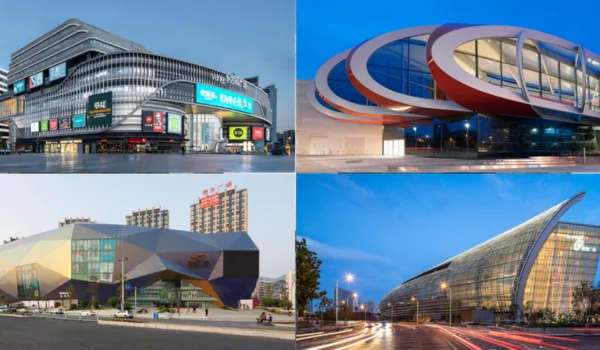
A commercial complex is a planned property or group of buildings containing multiple commercial units used by different businesses.
Depending on its design and location, a commercial complex may accommodate:
- Retail shops
- Offices
- Banks and financial services
- Clinics and healthcare services
- Restaurants and cafés
- Salons and beauty services
- Professional offices
- Showrooms
- Educational or training centres
- Service businesses
- Small and medium-sized enterprises
The primary objective of a commercial complex is usually to provide organised commercial space for multiple businesses within a shared development.
Some complexes are primarily retail-oriented, while others may combine offices, shops, restaurants, and services.
This means that the term commercial complex is broader than shopping mall.
What Is a Shopping Mall?
A shopping mall is a large, organised retail destination designed primarily for shopping and consumer-oriented experiences.
Modern malls commonly include:
- Fashion and apparel stores
- Department stores
- Electronics retailers
- Jewellery stores
- Beauty and lifestyle brands
- Restaurants and cafés
- Food courts
- Multiplexes
- Entertainment centres
- Children’s activity areas
- Supermarkets or hypermarkets
- Experience-based retail
Unlike a small commercial complex, a mall generally focuses heavily on customer experience, organised retail, entertainment, and footfall generation.
The Indian retail market has increasingly moved toward experience-led formats, with malls incorporating dining, entertainment, flagship stores, and other attractions to encourage longer customer visits.
Commercial Complex vs Shopping Mall: The Main Difference
The simplest way to understand the distinction is this:
A commercial complex is a broad category of organised commercial property, while a shopping mall is a specialised large-scale retail destination.
A commercial complex may primarily serve businesses and their customers. A shopping mall is generally designed around shoppers, visitors, entertainment, and consumer experiences.
However, there can be some overlap. A large commercial complex can contain substantial retail space, while modern malls can include offices, hotels, residential components, or other uses as part of a larger mixed-use development.
Key Differences Between Commercial Complex and Shopping Mall
| Factor | Commercial Complex | Shopping Mall |
| Primary purpose | Multiple types of commercial activities | Organised shopping and entertainment |
| Typical businesses | Offices, shops, clinics, banks, services, restaurants | Retail brands, F&B, entertainment and lifestyle businesses |
| Scale | Small to large | Generally medium to very large |
| Customer focus | Depends on the businesses operating there | Strong focus on visitors and shoppers |
| Tenant mix | Often diverse | Usually retail and experience focused |
| Footfall | Can be moderate or business-driven | Usually designed to generate high consumer footfall |
| Entertainment | May be limited or absent | Often an important component |
| Food and dining | May have a few outlets | Usually includes food courts, cafés and restaurants |
| Management | Can range from basic to professional facility management | Usually structured and professionally managed |
| Parking | Depends on size and planning | Generally extensive and planned for visitors |
| Marketing | Often limited to individual businesses/property | Usually centralised mall-level marketing |
| Business environment | Professional, service-oriented, retail or mixed | Consumer-oriented and experience-driven |
| Investment profile | Depends strongly on location and tenant demand | More dependent on retail performance, footfall and mall quality |
- Purpose and Business Use
One of the biggest differences between a commercial complex and a shopping mall is their intended purpose.
A commercial complex is designed to accommodate different forms of commercial activity. For example, one building might have a bank on the ground floor, offices on upper floors, a restaurant, a clinic, and several retail shops.
A shopping mall is more specifically designed around consumer retail.
Its tenants may include fashion brands, electronics stores, jewellery retailers, restaurants, cafés, entertainment operators, and other consumer-focused businesses.
Therefore, a commercial complex generally offers greater functional diversity, while a mall offers a more concentrated retail experience.
- Size and Scale
Commercial complexes can vary significantly in size.
A relatively small development may contain a few dozen commercial units, while a large commercial complex can include several buildings and hundreds of businesses.
Shopping malls are generally built at a larger scale because they need to accommodate:
- Numerous retail stores
- Large anchor tenants
- Restaurants
- Entertainment facilities
- Common areas
- Parking
- Service areas
- Visitor circulation spaces
Large malls therefore require more extensive infrastructure and operational planning.
However, size alone does not determine whether a property is a commercial complex or a mall. The purpose and operating model are equally important.
- Tenant Mix
Tenant mix is another major distinction.
A commercial complex can have a highly diverse tenant base. For example:
- Chartered accountants
- Lawyers
- Insurance companies
- Banks
- Clinics
- Travel agencies
- Real estate firms
- Retail shops
- Restaurants
- Salons
- IT service providers
A shopping mall generally has a more consumer-focused tenant mix.
Typical categories include:
- Fashion
- Apparel
- Footwear
- Jewellery
- Cosmetics
- Electronics
- Home and lifestyle
- Food and beverages
- Entertainment
Modern Indian malls are increasingly refining their tenant mix around experiences and consumer preferences rather than simply filling available space.
- Customer Footfall
Footfall can be important to both types of properties, but the reason behind it can differ.
In a commercial complex, visitors may arrive for a specific purpose.
For example, someone may visit a complex to:
- Meet a lawyer
- Visit a doctor
- Open a bank account
- Purchase a product
- Attend an office appointment
- Eat at a restaurant
- Use a professional service
A shopping mall generally tries to encourage broader consumer footfall.
Visitors may come to:
- Shop
- Eat
- Watch movies
- Meet friends
- Spend leisure time
- Attend entertainment activities
- Explore multiple stores
Therefore, mall footfall is usually more closely connected to the overall consumer experience, whereas commercial-complex traffic can be more purpose-driven.
- Shopping Experience
Shopping malls are designed to create a controlled and consistent shopping environment.
Common features include:
- Air-conditioned interiors
- Escalators
- Elevators
- Indoor walkways
- Food courts
- Seating areas
- Digital directories
- Entertainment facilities
- Security systems
- Customer parking
- Event and promotional spaces
A commercial complex may provide some of these features, but the level of investment can vary considerably.
A smaller commercial complex may focus primarily on providing accessible commercial units rather than creating a complete destination experience.
- Entertainment and Dining
Entertainment is usually much more important in shopping malls.
A modern mall may contain:
- Multiplexes
- Gaming zones
- Family entertainment centres
- Children’s play areas
- Restaurants
- Food courts
- Cafés
- Event spaces
These facilities can help attract visitors even when they are not specifically planning to shop.
Commercial complexes can also have restaurants, cafés, and entertainment businesses, but they are not necessarily central to the property’s identity.
This distinction is becoming less rigid, however. CBRE’s research indicates that experience-led retail and mixed-use developments are becoming increasingly important in India’s retail landscape.
- Parking and Accessibility
Parking is important for both commercial complexes and shopping malls, but malls generally require significantly greater visitor-oriented parking capacity because of their scale and expected footfall.
A shopping mall may need parking for:
- Cars
- Motorcycles and scooters
- Families visiting together
- Employees
- Delivery vehicles
- Service providers
Commercial complexes may have smaller parking requirements depending on their size, location, and tenant profile.
Accessibility also includes:
- Road connectivity
- Public transportation
- Metro access
- Pedestrian access
- Entry and exit points
- Internal circulation
For businesses, poor accessibility can reduce customer convenience even when the property itself is well designed.
- Property Management
Shopping malls usually operate through a structured management system.
Mall management may be responsible for:
- Security
- Cleaning
- Parking
- Maintenance
- Common-area management
- Events
- Marketing
- Tenant coordination
- Building operations
- Customer experience
Commercial complexes can also have professional property management, but the level of management varies.
Some complexes have sophisticated facility management systems, while smaller properties may operate through a building association, property owner, or local management team.
This difference can directly affect the tenant experience.
- Marketing and Promotion
Shopping malls often market the entire destination, not just individual stores.
Mall-level marketing can include:
- Festival campaigns
- Seasonal sales
- Brand events
- Celebrity appearances
- Food festivals
- Entertainment programmes
- Social media campaigns
- Loyalty programmes
- Promotional activities
This creates a collective marketing effect.
A business operating in a commercial complex may have to rely more heavily on its own advertising, reputation, digital marketing, signage, referrals, and customer relationships.
Some premium commercial complexes also conduct centralised marketing, but it is generally less extensive than what is seen in major shopping malls.
- Cost Structure for Businesses
The cost of occupying commercial space depends on several factors, including location, size, property quality, demand, and lease structure.
Businesses operating in malls may face multiple occupancy-related expenses beyond base rent.
Depending on the agreement, these can include:
- Common-area maintenance charges
- Marketing charges
- Utilities
- Security-related costs
- Parking-related expenses
- Revenue-sharing arrangements
- Fit-out expenses
Commercial complexes can also have maintenance and common-area charges, but their cost structure may be simpler depending on the property.
Businesses should therefore compare the total occupancy cost, rather than looking only at the advertised rent.
- Business Visibility
Shopping malls can provide strong visibility because businesses operate alongside established brands and within a high-footfall environment.
However, visibility does not automatically mean profitability.
A store’s performance can depend on:
- Its location within the mall
- Floor position
- Nearby anchor tenants
- Store frontage
- Customer profile
- Product category
- Rental cost
- Competition
Commercial complexes can offer a different kind of visibility.
A business may benefit from being located on a busy road, near offices, close to a residential area, or within a specialised business cluster.
For some professional services, easy accessibility and a convenient location can be more valuable than extremely high pedestrian footfall.
- Which Businesses Are Better Suited to a Commercial Complex?
A commercial complex can be particularly suitable for businesses that depend on appointments, local customers, professional relationships, or regular repeat visits.
Examples include:
Professional Services
- Lawyers
- Chartered accountants
- Consultants
- Architects
- Real estate professionals
Healthcare
- Clinics
- Diagnostic centres
- Dental practices
- Physiotherapy centres
Financial Services
- Banks
- Insurance offices
- Loan consultants
- Investment services
Retail and Services
- Mobile stores
- Electronics shops
- Salons
- Boutiques
- Repair services
Food Businesses
- Cafés
- Restaurants
- Bakeries
- Quick-service outlets
The suitability depends heavily on the specific location and customer catchment.
- Which Businesses Are Better Suited to a Shopping Mall?
Shopping malls are generally better suited to consumer-facing businesses that benefit from high footfall and a broader shopping environment.
These can include:
- Fashion brands
- Footwear brands
- Jewellery stores
- Cosmetics retailers
- Lifestyle stores
- Electronics brands
- Department stores
- Restaurants
- Cafés
- Entertainment businesses
- Multiplexes
- Experience-based retail concepts
Retail leasing in India continues to be driven by categories such as fashion and apparel, food and beverage, entertainment, jewellery, and other consumer-oriented segments.
Commercial Complex vs Shopping Mall for Business Owners
There is no universally better option.
The right choice depends on the business model.
| Business Requirement | Better-Suited Option |
| Professional office | Commercial complex |
| Small consultancy | Commercial complex |
| Clinic | Commercial complex |
| Bank or financial office | Commercial complex |
| Local service business | Commercial complex |
| Fashion brand | Shopping mall |
| Jewellery brand | Shopping mall |
| Lifestyle retailer | Shopping mall |
| Large consumer brand | Shopping mall |
| Restaurant | Either, depending on location |
| Café | Either, depending on customer profile |
| Entertainment centre | Shopping mall |
| Appointment-based business | Commercial complex |
This is only a general guideline. A high-quality commercial complex in a prime location can outperform a poorly located mall for certain businesses.
Commercial Complex vs Shopping Mall for Investors
The comparison becomes more complicated from an investment perspective.
An investor should not assume that a shopping mall is automatically a better investment simply because it attracts more visitors.
Instead, several factors should be evaluated.
Location
Location remains one of the most important considerations.
Look at:
- Population density
- Road connectivity
- Public transportation
- Nearby residential areas
- Office population
- Competing properties
- Future infrastructure
- Parking accessibility
Tenant Demand
A property with strong tenant demand may have better long-term prospects.
Consider:
- Occupancy levels
- Tenant retention
- Rental demand
- Tenant quality
- Vacancy periods
- Business turnover
Tenant Mix
A balanced tenant mix can make a property more resilient.
For a mall, excessive dependence on a single category can be risky.
For a commercial complex, having a combination of offices, services, retail, healthcare, food, and other uses can create a more diverse ecosystem.
Management Quality
Good property management can have a significant effect on:
- Maintenance
- Cleanliness
- Security
- Tenant satisfaction
- Customer experience
- Occupancy
- Property reputation
Total Costs
Investors should examine:
- Purchase price
- Stamp duty and registration
- Maintenance
- Property taxes
- Vacancy risk
- Renovation costs
- Brokerage
- Financing costs
- Legal and compliance expenses
The headline rental yield should not be considered in isolation.
Can a Commercial Complex Become Similar to a Shopping Mall?
Yes.
The boundaries between different commercial-property formats are becoming less rigid.
A large commercial development may combine:
- Retail
- Restaurants
- Offices
- Entertainment
- Hospitality
- Residential components
- Public spaces
Such developments can effectively create a mixed-use business and lifestyle ecosystem.
India’s retail market is increasingly seeing shopping, dining, entertainment, high-street retail, business-park retail, mixed-use developments, and transit-linked formats operating alongside traditional mall models.
This means that the future of commercial real estate may not always fit neatly into categories such as “mall” or “commercial complex.”
Commercial Complex vs Shopping Mall: Advantages and Disadvantages
Commercial Complex Advantages
- More diverse business uses
- Can accommodate professional services
- Often suitable for smaller businesses
- Potentially lower operating complexity
- Can serve local and business customers
- Flexible property formats
- Suitable for office and service-oriented businesses
Potential Disadvantages
- Footfall may be lower
- Marketing may be limited
- Amenities may vary
- Management quality can differ
- Customer experience may be less standardised
Shopping Mall Advantages
- Strong consumer orientation
- High potential footfall
- Professional property management
- Extensive amenities
- Centralised marketing
- Strong brand environment
- Shopping, dining and entertainment in one destination
Potential Disadvantages
- Higher occupancy costs in many cases
- Strict operating rules
- Significant fit-out requirements
- Strong competition between brands
- Performance can depend heavily on mall footfall and tenant mix
- Not every business needs a mall environment
How to Choose Between a Commercial Complex and Shopping Mall
Before selecting a property, ask the following questions:
- Who Is Your Target Customer?
If your customers are primarily office clients, patients, local residents, or appointment-based visitors, a commercial complex may be more practical.
If your target audience is shoppers and lifestyle consumers, a mall may be more appropriate.
- How Important Is Footfall?
Businesses such as fashion stores and entertainment centres may depend heavily on footfall.
Professional services may care more about accessibility, convenience, reputation, and repeat customers.
- What Is Your Budget?
Calculate the complete cost of occupying the property, not simply the monthly rent.
- How Much Space Do You Need?
Compare the available unit sizes and determine whether the property can accommodate your current and future requirements.
- What Are the Property Rules?
Check:
- Business-use restrictions
- Operating hours
- Signage rules
- Parking policies
- Fit-out regulations
- Delivery restrictions
- Maintenance charges
- Security deposits
- Lease conditions
- What Is the Future Potential?
Study upcoming:
- Roads
- Metro connections
- Residential developments
- Office projects
- Infrastructure projects
- Competing commercial developments
Connectivity improvements can expand customer catchment areas and influence the attractiveness of commercial and retail developments.
Commercial Complex or Shopping Mall: Which Is Better?
There is no single answer.
A commercial complex may be better for businesses that value flexibility, professional accessibility, local customers, services, offices, and a diverse commercial environment.
A shopping mall may be better for businesses that depend on consumer footfall, organised retail, brand visibility, entertainment, and experience-driven shopping.
For investors, the better property depends on location, tenant demand, occupancy, rental potential, management quality, property condition, and long-term development prospects.
The important point is that a property’s performance should be evaluated on its actual business ecosystem rather than its label alone.
A well-located commercial complex with strong tenants can be more attractive than a poorly performing mall. Likewise, a professionally managed mall in a strong catchment area can offer opportunities that a small commercial development cannot easily replicate.
Frequently Asked Questions
Is a commercial complex the same as a shopping mall?
No. A commercial complex is a broader category that can contain offices, shops, clinics, banks, restaurants, and other businesses. A shopping mall is generally a larger, organised retail destination focused on shopping, dining, entertainment, and customer experience.
Is a shopping mall a type of commercial complex?
In a broad real-estate sense, a shopping mall can be considered a type of commercial development. However, in everyday property terminology, “commercial complex” and “shopping mall” usually refer to different formats.
Which is better for a small business?
It depends on the business. Professional services and local service businesses may find a commercial complex more suitable, while consumer-facing retail businesses may benefit from a shopping mall.
Which has more footfall?
Shopping malls are generally designed to generate greater consumer footfall, although actual traffic depends on location, tenant mix, accessibility, reputation, and management.
Are commercial complexes cheaper than shopping malls?
Not necessarily. Costs depend on location, property quality, unit size, demand, lease structure, and other factors. A premium commercial complex can be more expensive than a poorly performing or less centrally located mall unit.
Can offices operate inside a shopping mall?
Some modern mixed-use developments can include office or business components, but traditional shopping malls are primarily retail and consumer-oriented.
What should investors check before buying commercial property?
Investors should examine location, connectivity, tenant demand, occupancy, rental potential, tenant mix, management, maintenance costs, legal documentation, title, approvals, and future development around the property.
What is the biggest difference between a commercial complex and a shopping mall?
The biggest difference is purpose. Commercial complexes support a broader range of commercial activities, while shopping malls are primarily designed as organised retail and consumer-experience destinations.
Final Thoughts
The difference between a commercial complex vs shopping mall goes beyond size or the number of shops.
A commercial complex is generally a more flexible commercial environment that can support offices, services, retail, healthcare, finance, food businesses, and other activities. A shopping mall is a specialised retail destination designed around shopping, dining, entertainment, customer experience, and organised footfall.
For business owners, the best choice depends on the target customer, business model, budget, accessibility, visibility, and required facilities. For investors, the focus should be on the property’s location, tenant demand, occupancy, management, rental potential, and long-term prospects.
As India’s commercial real estate landscape continues to evolve, the distinction between traditional malls, commercial complexes, high streets, mixed-use developments, and other retail formats is becoming increasingly fluid. The strongest properties are often those that combine location, accessibility, the right tenant mix, useful amenities, and a sustainable business ecosystem.