Commercial complexes come in different forms, and each type is designed to serve a particular combination of businesses, customers, and commercial activities. While some complexes are primarily focused on retail shopping, others are designed for offices, professional services, restaurants, or a combination of several uses.
Understanding the different types of commercial complexes is important for business owners, tenants, property buyers, and investors. A retail business may perform best in a shopping-oriented complex, while a consulting firm may prefer an office complex. Similarly, businesses looking for a combination of retail visibility and professional workspace may consider a mixed-use or shop-cum-office development.
The right commercial complex ultimately depends on the business model, target customers, location, budget, accessibility, and long-term requirements.
What Is a Commercial Complex?
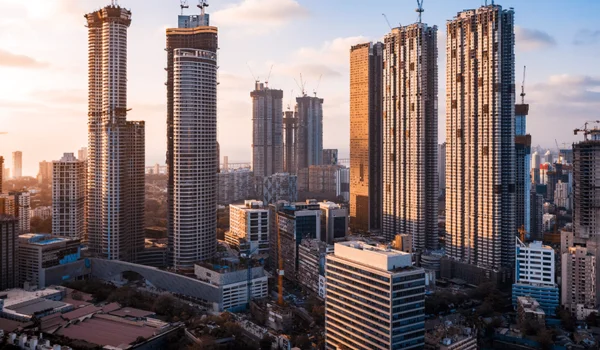
A commercial complex is a planned building or development that accommodates multiple businesses or commercial activities within a shared property.
Depending on the project, it may include shops, offices, showrooms, restaurants, clinics, banks, professional services, entertainment facilities, or other commercial establishments.
The businesses generally operate from individual units while sharing certain facilities and infrastructure, such as:
- Parking
- Security
- Elevators
- Common entrances
- Corridors and lobbies
- Maintenance services
- Utilities
- Visitor areas
- Fire and safety infrastructure
Commercial complexes can range from relatively small neighbourhood developments to large commercial destinations with multiple buildings and extensive facilities.
Why Are There Different Types of Commercial Complexes?
Businesses have different operational requirements.
A clothing retailer needs customer visibility and regular foot traffic. An accounting firm may need a quieter professional environment. A restaurant needs customer access, visibility, parking, and suitable operating infrastructure.
Because of these differences, commercial properties are developed with different purposes and tenant profiles in mind.
The major types include:
- Shopping complexes
- Office complexes
- Mixed-use commercial complexes
- Business complexes
- Shop-cum-office complexes
- Retail and high-street complexes
- Specialized commercial complexes
Let’s look at each type in detail.
- Shopping Complexes
A shopping complex is primarily designed to accommodate retail businesses and consumer-facing services.
These complexes are generally built around the needs of shoppers and visitors. They may contain several stores within the same building or development.
Common Businesses in Shopping Complexes
A shopping complex may include:
- Clothing stores
- Footwear shops
- Electronics stores
- Jewellery shops
- Grocery stores
- Beauty salons
- Pharmacies
- Home furnishing stores
- Restaurants
- Cafés
- Specialty retailers
The exact tenant mix depends on the size, location, and positioning of the complex.
Key Features
Shopping complexes generally focus on:
- Customer accessibility
- Store visibility
- Pedestrian movement
- Parking
- Signage
- Convenient entrances and exits
- Attractive common areas
The objective is to make it easy for customers to discover and access multiple businesses in one location.
Who Should Consider a Shopping Complex?
Shopping complexes can be suitable for businesses that depend heavily on direct customer interaction.
Retailers, salons, restaurants, lifestyle stores, and other consumer-facing businesses may benefit from this type of environment.
Advantages
- Potential customer footfall
- Multiple businesses attract visitors
- Better retail visibility
- Shared facilities
- Customer convenience
Possible Limitations
- Higher occupancy costs in popular locations
- Competition from similar stores
- Parking challenges during peak hours
- Dependence on overall footfall
- Complex-specific operating rules
- Office Complexes
An office complex is designed primarily for companies and professional businesses that require dedicated workspace.
Unlike a shopping-focused development, an office complex generally prioritizes workplace functionality rather than continuous consumer foot traffic.
India’s office market includes a wide range of occupiers, from technology companies and multinational corporations to financial services firms and flexible workspace operators. Recent market data continues to show strong office leasing activity across major Indian cities.
Common Businesses in Office Complexes
Typical occupants may include:
- IT companies
- Consulting firms
- Financial services companies
- Insurance businesses
- Law firms
- Accounting firms
- Marketing agencies
- Real estate companies
- Startups
- Corporate offices
- Professional service providers
Key Features
Office complexes may provide:
- Reception areas
- Elevators
- Security
- Parking
- Meeting spaces
- Power and utility infrastructure
- High-speed connectivity
- Common work areas
- Professional surroundings
The exact facilities vary between properties.
Who Should Consider an Office Complex?
Office complexes are generally appropriate for businesses that require a formal workplace and regular employee operations.
They can be particularly useful for businesses that meet clients or business partners but do not need a large retail-facing storefront.
Advantages
- Professional business environment
- Suitable for employee-based operations
- Shared infrastructure
- Formal commercial address
- Potential networking opportunities
Possible Limitations
- May have less walk-in customer traffic
- Premium office locations can be expensive
- Parking can become a concern
- Building rules may restrict certain activities
- Mixed-Use Commercial Complexes
Mixed-use commercial complexes combine different types of commercial activities within the same development.
For example, one development may include offices, retail stores, restaurants, entertainment facilities, and other services. Some mixed-use developments can also combine commercial uses with residential or hospitality components.
The concept is becoming increasingly relevant in modern urban development because different uses can complement each other. Current Indian real-estate investment activity also includes mixed-use developments alongside office and other commercial asset classes.
Example of a Mixed-Use Complex
A large development could have:
Ground Floor: Retail stores and cafés
First to Fifth Floors: Offices
Designated Areas: Restaurants and leisure facilities
Other Sections: Services, parking, and supporting amenities
This creates a property where different types of users can interact with the same development.
Key Features
Mixed-use complexes often focus on:
- Diverse tenant mix
- Multiple commercial activities
- Integrated amenities
- Accessibility
- Parking
- Pedestrian-friendly areas
- Longer daily activity
Who Should Consider a Mixed-Use Complex?
Mixed-use developments can work well for businesses that benefit from exposure to different customer groups.
Retailers, restaurants, service providers, professional firms, and offices can all potentially find suitable spaces within such developments.
Advantages
- Diverse customer base
- Multiple sources of activity
- Complementary businesses
- Greater convenience
- Potentially stronger commercial ecosystem
Possible Limitations
- More complex property management
- Higher development and operating costs in some projects
- Different users may have conflicting requirements
- Success depends heavily on tenant mix and location
Retail research also indicates that retail integrated with vibrant mixed-use environments can benefit from the presence of offices, residential density, dining, and entertainment.
- Business Complexes
A business complex generally focuses on companies, professional services, and commercial offices.
It can be similar to an office complex, but the term “business complex” is often used more broadly for a development designed to accommodate different business activities.
Businesses Commonly Found in Business Complexes
These may include:
- Consultants
- Chartered accountants
- Lawyers
- Financial advisors
- Insurance agencies
- Marketing firms
- Technology businesses
- Recruitment agencies
- Real estate companies
- Small and medium-sized enterprises
Why Businesses Choose Business Complexes
A business complex can offer a formal commercial setting without requiring a company to occupy an entire standalone building.
Businesses can choose units according to their size and operational requirements.
Advantages
- Professional surroundings
- Shared infrastructure
- Flexible space options in some properties
- Business networking opportunities
- Central commercial address
Possible Limitations
- Limited retail footfall
- Shared facilities
- Building-specific restrictions
- Availability can vary by location
- Shop-Cum-Office Complexes
A shop-cum-office complex combines retail and office functionality.
These properties can be particularly useful for businesses that need both a customer-facing space and a workspace.
For example, a business may use the front or lower portion of a property as a showroom while using another portion as an office.
Businesses That May Benefit
Examples include:
- Furniture businesses
- Real estate agencies
- Travel companies
- Insurance businesses
- Professional service providers
- Design studios
- Retail distributors
- Trading businesses
Advantages
The biggest advantage is functional flexibility.
A business can potentially handle customer interactions, sales, administration, and management from the same commercial property.
What to Check
Before choosing a shop-cum-office property, businesses should verify:
- Permitted commercial use
- Layout
- Customer accessibility
- Parking
- Signage rules
- Operating restrictions
- Maintenance charges
The permitted use of a particular unit should always be confirmed from the relevant property documents and applicable local requirements.
- Retail and High-Street Commercial Complexes
Not every retail-oriented commercial property follows the traditional shopping-complex model.
Some developments are designed around high-street retail, where shops and businesses face active roads, pedestrian areas, or established commercial corridors.
High-street locations can be particularly attractive to brands that depend on visibility and direct customer access.
India’s retail market continues to include multiple formats beyond traditional malls, including high streets, mixed-use developments, business-park retail, outlet centres, and transit-oriented retail.
Typical Businesses
- Fashion brands
- Restaurants
- Cafés
- Jewellery stores
- Electronics retailers
- Lifestyle brands
- Salons
- Specialty stores
Key Advantage
The primary advantage is often visibility.
A business facing an active commercial road can potentially attract customers who are already travelling through the area.
Important Considerations
Businesses should examine:
- Road visibility
- Pedestrian movement
- Parking
- Signage opportunities
- Nearby businesses
- Traffic patterns
- Customer demographics
- Specialized Commercial Complexes
Some commercial complexes are designed around a particular industry or business category.
Instead of accommodating a wide variety of businesses, these developments may focus on a specific commercial purpose.
Examples can include:
- Medical or healthcare complexes
- Automobile commercial complexes
- Wholesale markets
- Technology-focused business centres
- Furniture markets
- Jewellery markets
- Professional service centres
Why Specialized Complexes Can Be Useful
A specialized complex can create a concentrated destination for customers looking for a particular type of product or service.
For example, an automobile-focused complex may bring dealerships, accessories, service providers, and related businesses into one commercial area.
The concentration can make the location more useful to both customers and businesses.
Commercial Complex vs Shopping Complex vs Office Complex
The terms can sometimes be used interchangeably, but their primary purposes are different.
| Type | Primary Purpose | Typical Users | Main Requirement |
| Shopping Complex | Retail and consumer services | Shoppers and customers | Footfall and visibility |
| Office Complex | Professional and corporate work | Employees and clients | Workspace and connectivity |
| Mixed-Use Complex | Combination of uses | Diverse users | Integrated infrastructure |
| Business Complex | Business and professional activities | Companies and professionals | Accessibility and business environment |
| Shop-Cum-Office | Retail + office | Business owners and customers | Flexible space |
| High-Street Complex | Customer-facing retail | Shoppers and visitors | Visibility and accessibility |
| Specialized Complex | Specific industry | Targeted customers | Industry-focused infrastructure |
How to Choose the Right Type of Commercial Complex
Choosing the right type depends primarily on what your business needs.
For Retail Businesses
A shopping or high-street complex may be more suitable when your business depends on:
- Walk-in customers
- Visibility
- Footfall
- Product displays
- Easy parking
For Professional Services
An office or business complex may be more appropriate for:
- Consultants
- Accountants
- Lawyers
- Financial professionals
- Technology companies
- Agencies
Here, accessibility, privacy, professional surroundings, and workspace quality may be more important than high pedestrian traffic.
For Restaurants and Cafés
Restaurants may benefit from shopping, high-street, or mixed-use developments depending on their target customers.
Important factors include:
- Visibility
- Footfall
- Parking
- Delivery access
- Operating hours
- Surrounding businesses
- Permitted use
For Businesses Requiring Multiple Functions
A shop-cum-office or mixed-use environment can be useful when a company requires both customer-facing and administrative space.
For Investors
Investors should not select a commercial complex solely because of its type.
Instead, they should evaluate:
- Location
- Tenant demand
- Occupancy
- Rental potential
- Purchase price
- Tenant mix
- Maintenance costs
- Property management
- Future development
- Legal documentation
Factors That Matter Across All Types of Commercial Complexes
Regardless of the type, several factors can determine whether a commercial complex performs well.
Location
A good commercial property should be accessible to its intended customers, employees, and tenants.
Connectivity
Road access and public transportation can influence how convenient the property is.
Parking
Adequate parking can be particularly important for retail, healthcare, restaurant, and customer-facing businesses.
Tenant Mix
The businesses surrounding a particular unit can influence its commercial environment.
Complementary businesses may generate additional customer activity.
Property Management
Security, cleanliness, maintenance, common-area management, and responsiveness can influence the experience of both tenants and visitors.
Visibility
For customer-facing businesses, visibility from roads and pedestrian areas can be an important consideration.
Future Development
Upcoming roads, metro connectivity, residential projects, offices, infrastructure, and other developments can affect the long-term attractiveness of a commercial location.
How Commercial Complexes Are Changing
Commercial complexes are no longer limited to rows of shops or conventional office buildings.
Modern developments increasingly focus on creating integrated environments where work, retail, dining, services, and leisure activities can coexist.
India’s recent retail outlook, for example, highlights continued development of investment-grade retail, high-street evolution, mixed-use projects, and transit-integrated commercial environments.
This shift reflects a broader change in how people use commercial spaces. Customers increasingly value convenience and experience, while businesses look for locations that can provide visibility, accessibility, quality infrastructure, and an appropriate customer base.
Benefits of Having Different Commercial Uses in One Development
A diverse commercial complex can create several advantages.
More Reasons to Visit
Customers may visit a property for one business and discover other services during the same trip.
Better Utilization
Different businesses may generate activity at different times of the day.
For example, offices may be busiest during working hours, while restaurants and entertainment businesses may become more active later.
Business Synergies
Complementary businesses can create referral and cross-selling opportunities.
Stronger Commercial Identity
A well-occupied complex can gradually become recognized as a destination for particular products, services, or business activities.
Are All Types of Commercial Complexes Good Investments?
No.
The type of commercial complex is only one part of the investment decision.
A shopping complex in a weak location may perform worse than a smaller office complex in a strong business district. Similarly, a mixed-use development with impressive facilities may struggle if it has poor accessibility or weak tenant demand.
Investors should therefore look beyond the property’s appearance and advertised features.
The more important questions are:
- Is there genuine demand for commercial space?
- Who are the likely tenants?
- How accessible is the property?
- What is the current occupancy?
- What businesses operate nearby?
- What are the total ownership and maintenance costs?
- What rental levels are realistic?
- What development is expected around the property?
India’s commercial real-estate investment market has continued to attract capital across office, retail, mixed-use, and other segments, but individual property performance still depends on its specific fundamentals.
Final Thoughts
Commercial complexes come in many forms, and each type serves a different commercial purpose.
Shopping complexes are primarily focused on retail and customer activity. Office complexes are designed around professional and corporate requirements. Mixed-use complexes combine different commercial activities to create integrated destinations. Business complexes provide professional environments for companies and service providers, while shop-cum-office developments offer a combination of retail and workspace functions.
There are also high-street and specialized commercial complexes designed around specific customer groups or industries.
For businesses, the best choice is not necessarily the biggest or newest complex. It is the one that matches the company’s customers, operating requirements, budget, visibility needs, and long-term plans.
For investors, the property’s type should be considered alongside location, tenant demand, occupancy, rental potential, management quality, costs, and future development.
Ultimately, understanding the different types of commercial complexes makes it easier to compare properties and choose a commercial environment that supports the intended business or investment strategy.
Frequently Asked Questions
What are the main types of commercial complexes?
The main types include shopping complexes, office complexes, mixed-use commercial complexes, business complexes, shop-cum-office complexes, high-street commercial developments, and specialized commercial complexes.
Which type of commercial complex is best for retail businesses?
Shopping complexes and high-street commercial developments can be suitable for retail businesses because they can provide visibility and customer access. The best option depends on the location, target customers, rent, parking, and footfall.
What type of commercial complex is suitable for an office?
Office complexes and business complexes are generally designed for professional and corporate activities. Businesses should consider connectivity, workspace quality, parking, employee convenience, and total occupancy costs.
What is a mixed-use commercial complex?
A mixed-use commercial complex combines different types of commercial activities within the same development. It may include offices, retail stores, restaurants, entertainment, and other services.
What is a shop-cum-office complex?
A shop-cum-office complex combines customer-facing retail space with office or workspace functions. It can be useful for businesses that need both a commercial storefront and administrative space.
Are commercial complexes good for small businesses?
They can be. Small businesses may benefit from shared infrastructure, established commercial locations, customer activity, and professional surroundings. However, the suitability depends on rent, location, customer demand, and business requirements.
Which type of commercial complex is best for investment?
There is no single best type for every investor. Location, tenant demand, occupancy, purchase price, rental potential, maintenance costs, property management, and future development are generally more important than the property category alone.
What should I check before choosing a commercial complex?
Businesses should evaluate location, accessibility, parking, visibility, space, operating costs, permitted use, property rules, maintenance charges, tenant mix, and the suitability of the complex for their target customers.