A commercial complex is a planned property or development designed to accommodate multiple businesses and commercial activities within a shared location. Depending on its size and purpose, a commercial complex may include retail shops, offices, showrooms, restaurants, clinics, banks, service providers, and other commercial establishments.
For businesses, a commercial complex can provide access to an established commercial environment, shared facilities, customer traffic, and a professional business address. For property investors, it can offer opportunities related to rental income, occupancy, and long-term property value.
However, not every commercial complex is the same. Its location, design, tenant mix, accessibility, parking, management, surrounding development, and demand can significantly influence its usefulness and investment potential.
This guide explains what a commercial complex is, how it works, the different types, its advantages and disadvantages, and the key factors businesses and investors should consider before choosing one.
What Is a Commercial Complex?
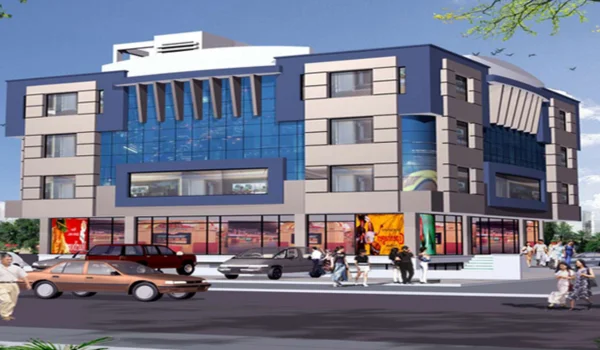
A commercial complex is a building or group of buildings developed primarily for commercial purposes.
Instead of accommodating one business in an isolated property, a commercial complex generally brings several businesses together in an organized development. Individual units may be rented, leased, or sold to different businesses or investors, depending on the project’s structure.
A typical commercial complex might contain:
- Retail shops
- Offices
- Showrooms
- Restaurants and cafés
- Clinics
- Banks and financial services
- Professional offices
- Service businesses
- Co-working spaces
- Storage or support areas
- Common parking facilities
The exact combination depends on the property’s design and permitted commercial use.
One of the defining characteristics of a commercial complex is the presence of shared infrastructure. Businesses may share facilities such as entrances, elevators, corridors, parking, security systems, landscaping, common utilities, and other amenities.
Modern commercial developments can also combine different commercial uses. For example, some developments integrate retail spaces with office areas and other facilities, creating a more diverse business environment.
How Does a Commercial Complex Work?
A commercial complex generally operates as a collection of individual commercial units within a larger managed property.
For example, a multi-storey complex might have:
- Retail stores on the ground floor
- Showrooms on lower levels
- Offices on upper floors
- Restaurants in designated areas
- Parking in basements or designated zones
Each business operates independently, but occupants share the overall infrastructure of the property.
Depending on the development, management responsibilities may include:
- Security
- Cleaning
- Common-area maintenance
- Elevator maintenance
- Parking management
- Waste management
- Landscaping
- Building repairs
- Utility management
- Fire and safety systems
The costs and responsibilities associated with these services vary from one property to another. Therefore, businesses and investors should understand the property’s management structure and applicable charges before entering into an agreement.
Why Are Commercial Complexes Important for Businesses?
Commercial complexes are designed around the idea of concentration.
When several businesses operate in one location, they can collectively create a commercial destination. Customers may visit the property for one purpose and discover other businesses during the same visit.
For example, a person visiting a bank may also visit a café, pharmacy, professional office, or retail store located within the same complex.
This creates a business environment where individual establishments can benefit from the overall activity of the property.
India’s commercial real-estate market includes office, retail and mixed-use formats, with demand supported by business expansion, urbanisation, infrastructure development and changing workplace requirements.
Types of Commercial Complexes
Commercial complexes can be classified according to their primary purpose and tenant mix.
- Shopping Complex
A shopping complex is primarily designed for retail and consumer-facing businesses.
It may contain:
- Clothing stores
- Electronics shops
- Grocery outlets
- Jewellery stores
- Salons
- Pharmacies
- Restaurants
- Specialty stores
Shopping complexes generally depend heavily on customer accessibility, visibility and footfall.
- Office Complex
An office complex is primarily designed for businesses that require professional workspace.
Typical occupants may include:
- IT companies
- Consultants
- Financial firms
- Law firms
- Marketing agencies
- Accounting firms
- Startups
- Corporate offices
Office complexes generally place greater emphasis on connectivity, parking, elevators, security, workspace quality and professional infrastructure.
- Mixed-Use Commercial Complex
A mixed-use commercial complex combines different types of commercial activities in one development.
For example, a property may contain:
- Retail
- Offices
- Restaurants
- Entertainment
- Service businesses
Some larger developments may integrate commercial spaces with residential or hospitality components as well.
This type of development can create activity at different times of the day and serve multiple customer groups.
- Business Complex
A business complex typically focuses on offices and professional services.
It can be suitable for companies that want a formal commercial address without occupying an entire standalone building.
- Shop-Cum-Office Complex
A shop-cum-office property combines retail and office functionality.
The property may allow a business to maintain a customer-facing area while also having workspace for administration, management or professional activities.
This format can be particularly useful for businesses that require both visibility and dedicated office space.
Key Features of a Good Commercial Complex
The quality of a commercial complex is not determined only by the appearance of its building. Several practical factors influence its long-term usefulness.
Strategic Location
Location is one of the most important factors.
A commercial complex near major roads, public transportation, residential neighbourhoods, offices, educational institutions or established business districts may have stronger potential for customer and tenant demand.
However, the ideal location depends on the type of business.
A restaurant may prioritize visibility and footfall, while a corporate office may prioritize connectivity and employee convenience.
Easy Accessibility
A commercial complex should be reasonably easy to reach by customers, employees and suppliers.
Important considerations include:
- Road connectivity
- Public transportation
- Entry and exit points
- Pedestrian access
- Traffic conditions
- Nearby landmarks
- Distance from major roads
Parking
Parking can have a direct impact on customer convenience.
Insufficient or poorly managed parking can become a major problem for retail businesses, restaurants, clinics and other customer-facing establishments.
Security
Security facilities can include:
- Security personnel
- CCTV surveillance
- Controlled entry
- Visitor management
- Emergency systems
The exact facilities vary by property.
Elevators and Common Areas
In a multi-storey complex, elevators, staircases, corridors, entrances and lobbies are essential parts of the customer and employee experience.
Well-maintained common areas can also contribute to the professional appearance of the property.
Maintenance
Regular maintenance is important for preserving the usability and appearance of a commercial complex.
This can involve:
- Cleaning
- Electrical systems
- Elevators
- Plumbing
- Parking areas
- Landscaping
- Common-area repairs
Benefits of a Commercial Complex for Businesses
- Better Business Visibility
A business operating in an active commercial complex may benefit from the overall activity generated by neighbouring businesses.
This can be particularly valuable for retail and service businesses.
- Shared Infrastructure
Businesses may gain access to facilities that would otherwise be expensive to establish independently.
Shared security, parking, elevators and common areas can make operations more convenient.
- Professional Address
An established commercial complex can provide businesses with a recognizable and professional address.
This can be useful for companies that regularly meet clients, customers, suppliers or business partners.
- Customer Convenience
Customers may be able to access several services at one location.
This convenience can encourage repeat visits and increase the overall usefulness of the commercial destination.
- Networking Opportunities
Businesses operating close to one another may find opportunities for:
- Referrals
- Partnerships
- Supplier relationships
- Cross-promotion
- Professional networking
For example, a financial consultant, insurance agency, accountant and business lawyer located in the same commercial environment may naturally serve overlapping customer groups.
- Established Commercial Environment
A well-occupied complex can create an environment where customers already expect to find businesses and services.
This can be beneficial compared with establishing a business in an isolated or undeveloped commercial location.
Commercial Complex vs Standalone Commercial Property
A commercial complex and a standalone commercial property can both be suitable for businesses, but they offer different advantages.
| Factor | Commercial Complex | Standalone Property |
| Businesses | Multiple businesses | Usually one primary business |
| Shared facilities | Commonly available | Usually independently managed |
| Customer traffic | Can benefit from neighbouring businesses | Depends more on the property’s own location |
| Maintenance | Often centrally managed | Usually handled independently |
| Business environment | Shared commercial environment | Greater independence |
| Parking | May be shared | Depends on property |
| Branding control | May have property rules | Usually greater flexibility |
| Networking | More opportunities | Generally fewer |
The better option depends on the business model.
A retail business may benefit from the activity of a busy complex, while a company requiring privacy, exclusive branding or specialized facilities may prefer a standalone property.
What Businesses Should Consider Before Choosing a Commercial Complex?
Choosing a commercial complex should involve more than comparing rent or purchase prices.
- Understand Your Business Requirements
Start by identifying what your business actually needs.
Consider:
- Required floor area
- Number of employees
- Customer visits
- Storage requirements
- Parking needs
- Visibility requirements
- Operating hours
- Expansion plans
- Study the Location
Evaluate the surrounding area rather than looking only at the building.
Check:
- Nearby residential areas
- Offices
- Schools and colleges
- Transport facilities
- Competing businesses
- Major roads
- Future infrastructure
- General commercial activity
- Check the Target Customer
Your ideal location depends on your customer profile.
A premium showroom may require high visibility, while a B2B consulting firm may care more about connectivity and a professional environment.
- Calculate the Total Cost
Do not evaluate a property solely on its monthly rent or purchase price.
Consider other expenses such as:
- Maintenance charges
- Utilities
- Parking
- Interior setup
- Signage
- Taxes and applicable charges
- Security-related expenses
- Other property-specific costs
- Understand Property Rules
Commercial complexes may have rules regarding:
- Signboards
- Renovations
- Operating hours
- Parking
- Noise
- Business categories
- Common areas
- Exterior modifications
These rules should be understood before signing an agreement.
What Investors Should Consider Before Investing in a Commercial Complex?
Commercial property can provide opportunities for rental income and long-term capital appreciation, but the investment should be evaluated carefully.
Location and Connectivity
A strong location can influence tenant demand, rental rates and future property value.
Tenant Demand
Investors should ask a simple question:
Do businesses actually want to operate in this location?
A property may look attractive on paper, but weak tenant demand can result in prolonged vacancies.
Occupancy
The occupancy level of a commercial complex can provide useful insight into its commercial performance.
An investor should examine whether units remain occupied and whether existing businesses appear sustainable.
Tenant Mix
A healthy mix of complementary businesses can make a commercial complex more attractive.
For example, a development combining offices, food outlets, financial services and retail businesses may serve multiple customer requirements.
Rental Potential
Potential rental income should be compared with actual market rents in the surrounding area.
Investors should avoid relying solely on projected returns presented in marketing material.
Management Quality
Good property management can influence:
- Maintenance
- Security
- Cleanliness
- Tenant satisfaction
- Common-area quality
- Long-term occupancy
Documentation and Due Diligence
Before purchasing commercial property, investors should conduct appropriate due diligence on ownership, title, approvals, permitted use, agreements, taxes, maintenance obligations and other applicable requirements.
For significant transactions, professional legal and financial advice can help identify risks that may not be obvious during a property visit.
What Makes a Commercial Complex Successful?
A commercial complex can have an impressive building but still struggle commercially.
Its success generally depends on several factors working together.
Location
The property must be accessible to its intended users.
Tenant Mix
Complementary businesses can generate additional reasons for customers to visit.
Footfall
Retail-oriented complexes often depend heavily on consistent customer activity.
Parking
Convenient parking can influence whether customers choose to visit the property.
Accessibility
Easy access by road and public transportation can support both businesses and customers.
Property Management
Clean, safe and well-maintained common areas contribute to the overall experience.
Surrounding Development
Nearby residential projects, offices, infrastructure and transportation improvements can influence the long-term demand for commercial space.
Advantages and Disadvantages of Commercial Complexes
Advantages
- Multiple businesses in one location
- Potentially higher customer activity
- Shared infrastructure
- Professional environment
- Better customer convenience
- Networking opportunities
- Centralized maintenance
- Potential rental opportunities for property owners
Disadvantages
- Shared maintenance expenses
- Parking limitations during busy periods
- Property-specific rules and restrictions
- Competition between similar businesses
- Dependence on overall property management
- Potential vacancy if the location fails to attract businesses
- Higher costs in premium commercial locations
Therefore, the presence of a commercial complex alone does not guarantee business success or investment returns.
Is a Commercial Complex a Good Investment?
A commercial complex can be a good investment, but it depends on the individual property.
Investors should evaluate:
- Location
- Purchase price
- Rental demand
- Occupancy
- Tenant quality
- Maintenance costs
- Property management
- Future development
- Legal and documentation factors
- Overall market conditions
Commercial real estate continues to be an important part of India’s broader real-estate market, with office and mixed-use assets attracting substantial business and institutional interest.
However, market growth at the national level does not automatically mean every commercial complex will perform well. The individual property’s fundamentals remain important.
How to Choose the Right Commercial Complex for Your Business
There is no single commercial complex that is ideal for every business.
For Retail Businesses
Focus on:
- Footfall
- Visibility
- Parking
- Accessibility
- Nearby residential areas
- Customer demographics
For Offices
Focus on:
- Connectivity
- Workspace quality
- Employee convenience
- Parking
- Internet and utility infrastructure
- Professional environment
For Restaurants
Focus on:
- Visibility
- Footfall
- Parking
- Customer access
- Delivery access
- Permitted usage
- Surrounding businesses
For Investors
Focus on:
- Location
- Tenant demand
- Occupancy
- Rental potential
- Purchase price
- Operating expenses
- Property management
- Documentation
Frequently Asked Questions
What is a commercial complex?
A commercial complex is a building or group of buildings designed to accommodate multiple commercial businesses such as offices, shops, showrooms, restaurants and service providers.
What is the difference between a commercial complex and a shopping mall?
A shopping mall is generally a large retail-focused development that may include extensive shopping, dining and entertainment facilities. A commercial complex can be smaller and may include offices, shops, professional services or mixed commercial uses.
Is a commercial complex suitable for small businesses?
Yes. A well-located commercial complex can provide small businesses with access to shared facilities, customers, professional surroundings and an established commercial environment.
What makes a commercial complex successful?
Location, accessibility, tenant mix, footfall, parking, property management, maintenance and surrounding development are among the major factors that can influence its success.
Can I buy a property in a commercial complex?
Depending on the project’s ownership and sales structure, individual commercial units may be available for purchase. Buyers should carefully examine the property’s title, approvals, permitted use, agreements, charges and other relevant documentation before purchasing.
Is renting or buying commercial space better?
Neither option is universally better. Renting generally provides greater flexibility and lower upfront commitment, while buying may provide ownership and potential long-term value. The appropriate choice depends on the business’s finances, plans and property market.
What should I check before investing in a commercial complex?
Investors should examine location, tenant demand, occupancy, rental potential, purchase price, maintenance costs, property management, surrounding development and legal documentation before making an investment decision.
Final Thoughts
A commercial complex brings multiple businesses and commercial activities together within an organized property. For businesses, it can provide visibility, accessibility, shared infrastructure and a professional environment. For investors, it can provide an opportunity to participate in commercial real estate through ownership and rental income.
But the quality of the commercial complex matters.
A strategically located property with good accessibility, adequate parking, strong tenant demand, complementary businesses and effective management can have very different prospects from a poorly located or poorly managed complex.
Whether you are a business owner looking for office or retail space or an investor evaluating commercial property, the best approach is to look beyond the building itself. Study the location, surrounding market, customer profile, tenant mix, costs, facilities and long-term potential before making a decision.
A commercial complex becomes valuable not simply because it contains commercial units, but because it creates an environment where businesses can operate, customers can access services, and property can remain commercially relevant over time.